Morris Downtown Commercial Historic District

Why it's listed
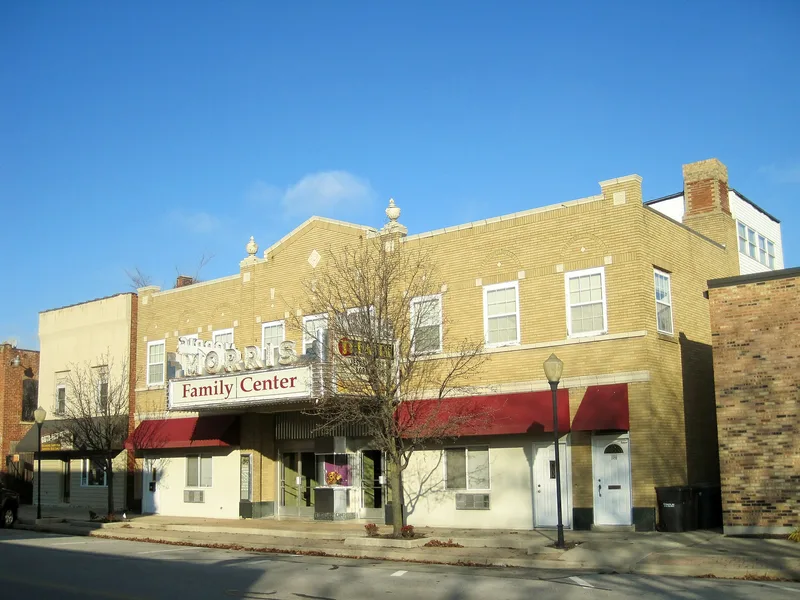
Morris's downtown core spans 16 blocks along Liberty and Washington Streets, an area platted in 1842. Most of its 117 resources are commercial buildings, generally brick, frame or local Aux Sable sandstone, no more than three stories, and laid out in lots about 25 feet wide that give the streetscape a steady rhythm. Brick became the common material from the 1850s, helped by nearby clay-product manufacturers. The district shows a progression of storefront types and styles rather than a single building era, including Italianate blocks, Queen Anne fronts, Renaissance Revival buildings with terra cotta detail, and the arcaded Washington House Hotel. Civic landmarks include the 1912-13 limestone Grundy County Courthouse, designed by Joseph W. Royer, a 1890 Soldiers and Sailors Monument, a 1932 Art Deco post office, and two railroad depots. Early automobile-era gas stations and garages add to the story. The district was listed for its architecture, commerce and transportation history.
Machine-generated summary. This summary was generated by a language model from the official nomination document and has not been reviewed line by line by an editor. It may contain errors. Check the source document before relying on any detail. Source: nomination document (PDF) · catalog entry. Generated October 2026 (model claude-sonnet-5-5, prompt v1.0-2026-10-29).
| Period of significance | Circa 1850-1956 |
|---|---|
| Styles | Commercial Style, Italianate, Classical Revival, Renaissance Revival, Art Deco, Queen Anne, Tudor Revival |
| Areas of significance | Architecture, Commerce, Transportation |
| Acreage | 24 |
| Boundary source | NPS cultural-resource GIS polygon |
| Full listing page | Morris Downtown Commercial Historic District (property record) |
What listing means for this property
This is a historic district. Buildings within its boundary are either contributing (they add to the district's significance) or non-contributing. Owners of contributing income-producing buildings can claim the 20% federal rehabilitation tax credit; homeowners should look at state credits. National Register districts impose no design review by themselves; a local historic district ordinance, if one exists, does (the difference explained).
General information, not legal or tax advice. Rules change; confirm with your State Historic Preservation Office or a qualified adviser.