Marion Veterans Administration Hospital Historic District

Why it's listed
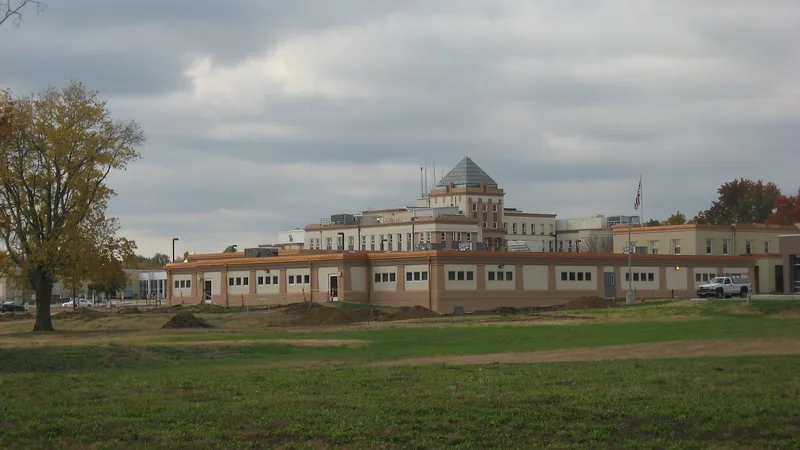
Marion's veterans hospital campus, on West Main Street about 1.5 miles west of downtown, was built in 1940 and began admitting patients in 1942 to provide general medical and surgical care. The district covers roughly 47 acres of a property once 341 acres. Its main building, dining hall, staff quarters and maintenance buildings follow standardized Veterans Administration layouts, yet they are dressed in Egyptian Revival detail, including terra cotta pilasters with lotus capitals, cavetto cornices, sun disks, a pyramidal roof over the central pavilion and stucco walls. The style referred to southern Illinois's nickname, Egypt or Little Egypt, and reportedly followed a suggestion from VA Administrator Frank T. Hines. It is the only Second Generation Veterans Hospital to use this style. Planned domiciliary buildings and wings were dropped because of rising costs and wartime shortages. The district was recognized for its architecture at the state level, with a period of significance of 1940 to 1950.
Machine-generated summary. This summary was generated by a language model from the official nomination document and has not been reviewed line by line by an editor. It may contain errors. Check the source document before relying on any detail. Source: nomination document (PDF) · catalog entry. Generated October 2026 (model claude-sonnet-5-5, prompt v1.0-2026-10-29).
| Period of significance | 1940-1950 |
|---|---|
| Styles | Late 19th and 20th Century Revivals: Egyptian Revival |
| Areas of significance | Architecture, Politics/Government, Health/Medicine |
| Acreage | 47 |
| Boundary source | NPS cultural-resource GIS polygon |
| Full listing page | Marion Veterans Administration Hospital Historic District (property record) |
What listing means for this property
This is a historic district. Buildings within its boundary are either contributing (they add to the district's significance) or non-contributing. Owners of contributing income-producing buildings can claim the 20% federal rehabilitation tax credit; homeowners should look at state credits. National Register districts impose no design review by themselves; a local historic district ordinance, if one exists, does (the difference explained).
General information, not legal or tax advice. Rules change; confirm with your State Historic Preservation Office or a qualified adviser.