Manske-Niemann Farm

Why it's listed
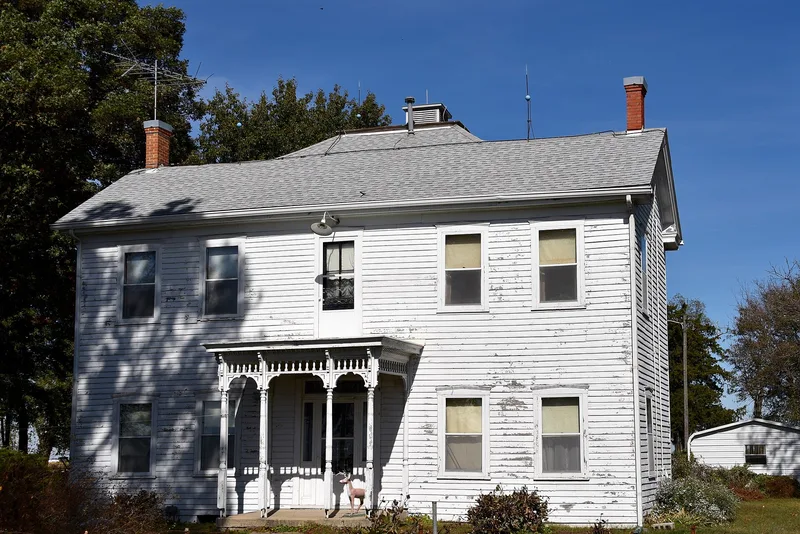
Four miles south of Litchfield, Illinois, beside former U.S. Route 66, this farmstead centers on a circle drive around a two-story frame house and about twenty major outbuildings. Gardens, an orchard, poultry yards, an apiary, a hog lot and pastures fill the spaces between them. The house began as a five-bay, side-gabled I-house with vernacular Greek Revival detailing, probably built between 1850 and 1870. Whether the original landowner, James Stuver, or the Prussian-born Michael Manske built it is uncertain. About 1900 the family added a large rear wing with Queen Anne interior trim, a bathroom, and a separate bedroom for hired hands. Surviving outbuildings include a brick smokehouse mentioned in an 1863 insurance policy, a privy, a brick-lined well, and a workshop where Clarence Niemann kept a forge and an overhead drive system for lathes and a drill press. The complex is significant as a well-preserved farm of a German immigrant family with 34 contributing resources.
Machine-generated summary. This summary was generated by a language model from the official nomination document and has not been reviewed line by line by an editor. It may contain errors. Check the source document before relying on any detail. Source: nomination document (PDF) · catalog entry. Generated October 2026 (model claude-sonnet-5-5, prompt v1.0-2026-10-29).
| Styles | Other: I-House (vernacular Greek Revival); Other: Barn |
|---|---|
| Areas of significance | Agriculture |
| Acreage | 462 |
| Boundary source | NPS cultural-resource GIS polygon |
| Full listing page | Manske-Niemann Farm (property record) |
What listing means for this property
This is a historic district. Buildings within its boundary are either contributing (they add to the district's significance) or non-contributing. Owners of contributing income-producing buildings can claim the 20% federal rehabilitation tax credit; homeowners should look at state credits. National Register districts impose no design review by themselves; a local historic district ordinance, if one exists, does (the difference explained).
General information, not legal or tax advice. Rules change; confirm with your State Historic Preservation Office or a qualified adviser.