Linden Park Place-Belle Avenue Historic District

Why it's listed
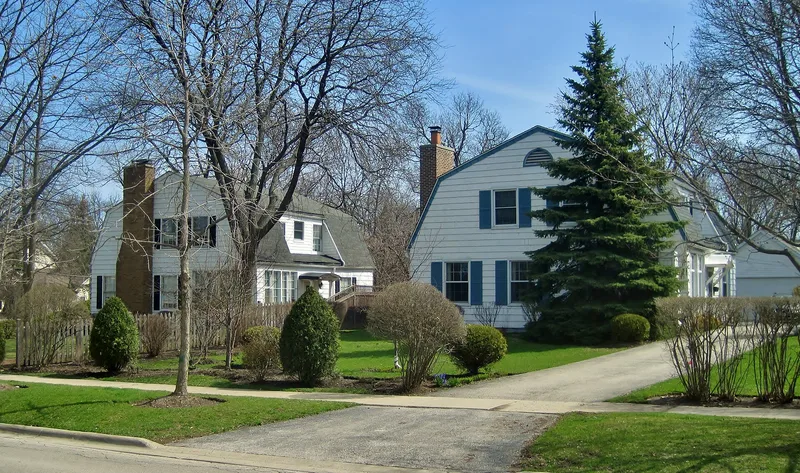
This roughly 50-acre neighborhood in Highland Park, Illinois, centers on Linden Park Place and Belle Avenue and extends along parts of Linden Avenue, Park Avenue, Park Lane and Elm Place. It holds some of the city's oldest houses, beginning in the late 1860s. Four Italianate and Victorian Gothic houses on Linden Park Place were built by the Highland Park Building Company, and Jonas Steers, the company's chief contractor, built his own distinctive home on Belle Avenue around 1875. Later decades added Prairie School houses by George Maher, Tallmadge and Watson, and John Van Bergen, along with Colonial Revival homes by Robert Seyfarth and Tudor houses by William D. Mann. A 1954 steel-and-glass house on Park Lane, designed by Crombie Taylor with Mies van der Rohe as consultant, represents the Miesian International Style. The district was listed because it shows the range of Highland Park architecture from early Victorian houses through mid-century modern design.
Machine-generated summary. This summary was generated by a language model from the official nomination document and has not been reviewed line by line by an editor. It may contain errors. Check the source document before relying on any detail. Source: nomination document (PDF) · catalog entry. Generated October 2026 (model claude-sonnet-5-5, prompt v1.0-2026-10-29).
| Styles | Mixed: Italianate, Victorian Gothic, Prairie School, Colonial Revival, Tudor, Miesian International Style |
|---|---|
| Areas of significance | Architecture |
| Acreage | 50 |
| Boundary source | NPS cultural-resource GIS polygon |
| Full listing page | Linden Park Place-Belle Avenue Historic District (property record) |
What listing means for this property
This is a historic district. Buildings within its boundary are either contributing (they add to the district's significance) or non-contributing. Owners of contributing income-producing buildings can claim the 20% federal rehabilitation tax credit; homeowners should look at state credits. National Register districts impose no design review by themselves; a local historic district ordinance, if one exists, does (the difference explained).
General information, not legal or tax advice. Rules change; confirm with your State Historic Preservation Office or a qualified adviser.