LeRoy Commercial Historic District

Why it's listed
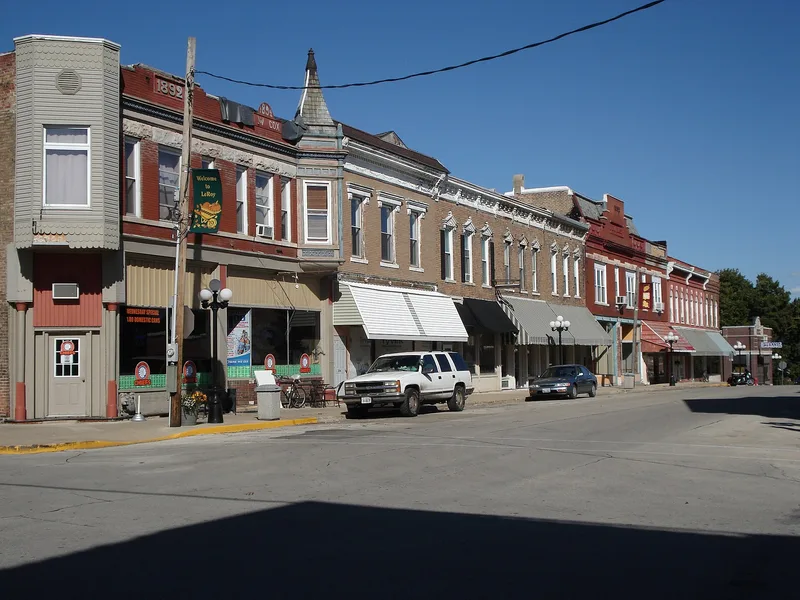
LeRoy, a farming town of about 2,800 people southeast of Bloomington, retains a compact business district along East Center and North Chestnut streets. Most of its buildings are two-story red brick structures with load-bearing masonry walls, built between 1870 and 1928. The earliest show Italianate features such as round-head upper windows and bracketed cornices, followed by Queen Anne and other eclectic designs, and early twentieth-century Classical Revival work. Notable examples include the 1884 First National Bank, the 1907 Odd Fellows Building, rebuilt after a fire, and the 1919 LeRoy State Bank with its Ionic portico, designed by Arthur L. Pillsbury. The 1903 Town Hall and the Town Park anchor the western end. The park contains a 1912 bronze statue of the Kickapoo chief Osaketa and a 1922 octagonal band pavilion. Because the town never experienced rapid growth cycles, many early commercial buildings survive, giving the district a consistent character. Twenty-seven resources contribute and two do not.
Machine-generated summary. This summary was generated by a language model from the official nomination document and has not been reviewed line by line by an editor. It may contain errors. Check the source document before relying on any detail. Source: nomination document (PDF) · catalog entry. Generated October 2026 (model claude-sonnet-5-5, prompt v1.0-2026-10-29).
| Styles | Italianate, Queen Anne, Classical Revival |
|---|---|
| Areas of significance | Commerce, Architecture |
| Acreage | 6.4 |
| Boundary source | NPS cultural-resource GIS polygon |
| Full listing page | LeRoy Commercial Historic District (property record) |
What listing means for this property
This is a historic district. Buildings within its boundary are either contributing (they add to the district's significance) or non-contributing. Owners of contributing income-producing buildings can claim the 20% federal rehabilitation tax credit; homeowners should look at state credits. National Register districts impose no design review by themselves; a local historic district ordinance, if one exists, does (the difference explained).
General information, not legal or tax advice. Rules change; confirm with your State Historic Preservation Office or a qualified adviser.