Kankakee State Hospital Historic District

Why it's listed
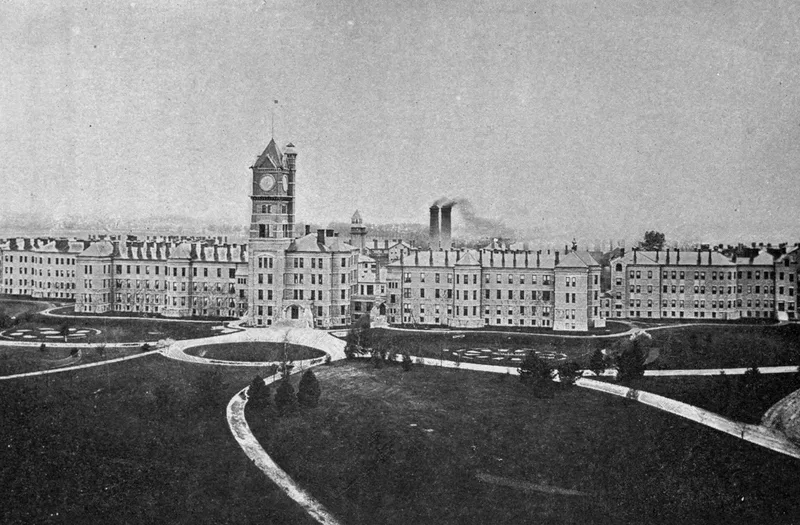
Kankakee State Hospital Historic District occupies the south bank of the Kankakee River in Kankakee, Illinois. Designed in 1878 as the Illinois Eastern Hospital for the Insane, it grew from 251 acres to about 2,000, and 119 acres with the historic buildings are nominated. Its centerpiece is the Administration Center of 1879, a four-story limestone building with a seven-story tower, designed by Chicago architect James R. Willett on the Kirkbride plan. Nearby stand detached cottages, which the nomination describes as the first of their kind in the United States and which replaced the single-building model. H.W.S. Cleveland laid out winding roads, an oval lawn and tree groves. Yellow Joliet limestone unifies the early buildings, while later ones are mostly red brick with Classical details. Adolf Meyer practiced here in the 1890s, and the grounds record changing approaches to mental health care. The complex remains in use as a developmental center, with a museum in the tower.
Machine-generated summary. This summary was generated by a language model from the official nomination document and has not been reviewed line by line by an editor. It may contain errors. Check the source document before relying on any detail. Source: nomination document (PDF) · catalog entry. Generated October 2026 (model claude-sonnet-5-5, prompt v1.0-2026-10-29).
| Styles | Romanesque Revival; Classical Revival |
|---|---|
| Areas of significance | Health/Medicine, Architecture |
| Acreage | 119 |
| Boundary source | NPS cultural-resource GIS polygon |
| Full listing page | Kankakee State Hospital Historic District (property record) |
What listing means for this property
This is a historic district. Buildings within its boundary are either contributing (they add to the district's significance) or non-contributing. Owners of contributing income-producing buildings can claim the 20% federal rehabilitation tax credit; homeowners should look at state credits. National Register districts impose no design review by themselves; a local historic district ordinance, if one exists, does (the difference explained).
General information, not legal or tax advice. Rules change; confirm with your State Historic Preservation Office or a qualified adviser.