Judah, Noble, Estate

Why it's listed
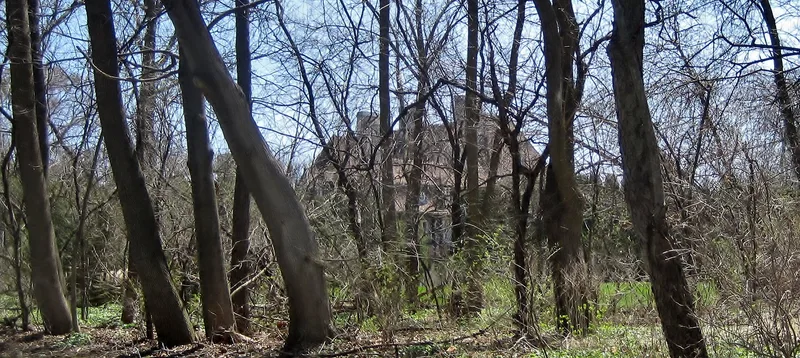
Built between 1925 and 1928 on forty acres west of Green Bay Road in Lake Forest, Illinois, this country estate was designed by New York architect Philip Lippincott Goodwin for Noble Brandon Judah and his wife. The nominated portions include the main house, a gatehouse, a stair structure, a gazebo-like building, formal sunken gardens, a walled forecourt, and a separate pool area flanked by two poolhouses. The house is wood frame clad in warm yellow rough-faced limestone and patterned red brick with half-timbering, under steeply pitched flared hip and mansard tile roofs. Rooms, about 29 in all, surround an enclosed courtyard with fountains, and many interiors use imported French paneling and parquet. The outbuildings share the same materials and roof forms. Later subdivision removed parts of the original property, and the residence garage, orangerie and walled garden were left out. What remains retains its original relationships between buildings, walls and gardens, and is compared favorably with other French-style Lake Forest estates.
Machine-generated summary. This summary was generated by a language model from the official nomination document and has not been reviewed line by line by an editor. It may contain errors. Check the source document before relying on any detail. Source: nomination document (PDF) · catalog entry. Generated October 2026 (model claude-sonnet-5-5, prompt v1.0-2026-10-29).
| Styles | French Renaissance Revival |
|---|---|
| Areas of significance | Architecture |
| Acreage | 7 |
| Boundary source | NPS cultural-resource GIS polygon |
| Full listing page | Judah, Noble, Estate (property record) |
What listing means for this property
This is a historic district. Buildings within its boundary are either contributing (they add to the district's significance) or non-contributing. Owners of contributing income-producing buildings can claim the 20% federal rehabilitation tax credit; homeowners should look at state credits. National Register districts impose no design review by themselves; a local historic district ordinance, if one exists, does (the difference explained).
General information, not legal or tax advice. Rules change; confirm with your State Historic Preservation Office or a qualified adviser.