Jeffery-Cyril Historic District

Why it's listed
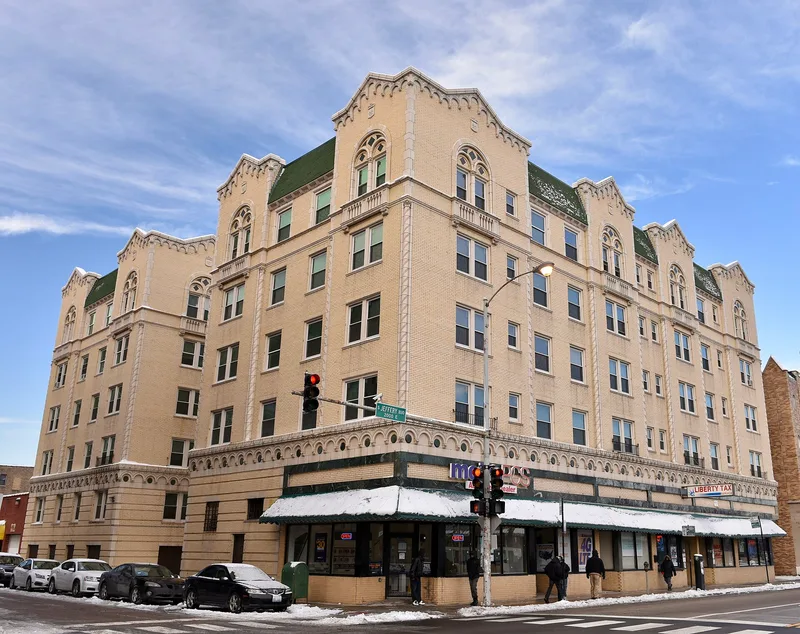
Six apartment buildings of five to thirteen stories stand together around Cyril Avenue and Jeffery Boulevard in Chicago's South Shore neighborhood. Built between 1927 and 1929 on land that had remained vacant until the 1920s, they rise above the low-rise commercial, apartment and single-family buildings around them. Each uses a different style: Georgian Revival, Tudor Revival, Spanish Colonial Revival, Gothic Revival and Art Deco. Three of them, the Gothic Bedford Villa, the Spanish-style East 71st Place Building and the Art Deco Jeffery Terrace, were designed by Paul F. Olsen for realtor Walter F. Kinnucan. The Jeffery-Cyril Apartments were built as a cooperative, offering home ownership in an apartment. The nomination presents the group as an illustration of 1920s apartment design, when revival styles were meant to suggest domestic comfort and Art Deco pointed toward modernism. Cyril Avenue, a one-block street, gives most of the buildings a courtyard-like setting. The buildings keep their original character, with few alterations apart from one modern storefront.
Machine-generated summary. This summary was generated by a language model from the official nomination document and has not been reviewed line by line by an editor. It may contain errors. Check the source document before relying on any detail. Source: nomination document (PDF) · catalog entry. Generated October 2026 (model claude-sonnet-5-5, prompt v1.0-2026-10-29).
| Period of significance | 1927-1929 |
|---|---|
| Styles | Gothic, Tudor, Georgian, Spanish Colonial and Art Deco |
| Areas of significance | Architecture |
| Acreage | 3 |
| Boundary source | NPS cultural-resource GIS polygon |
| Full listing page | Jeffery-Cyril Historic District (property record) |
What listing means for this property
This is a historic district. Buildings within its boundary are either contributing (they add to the district's significance) or non-contributing. Owners of contributing income-producing buildings can claim the 20% federal rehabilitation tax credit; homeowners should look at state credits. National Register districts impose no design review by themselves; a local historic district ordinance, if one exists, does (the difference explained).
General information, not legal or tax advice. Rules change; confirm with your State Historic Preservation Office or a qualified adviser.