Jefferson Park

Why it's listed
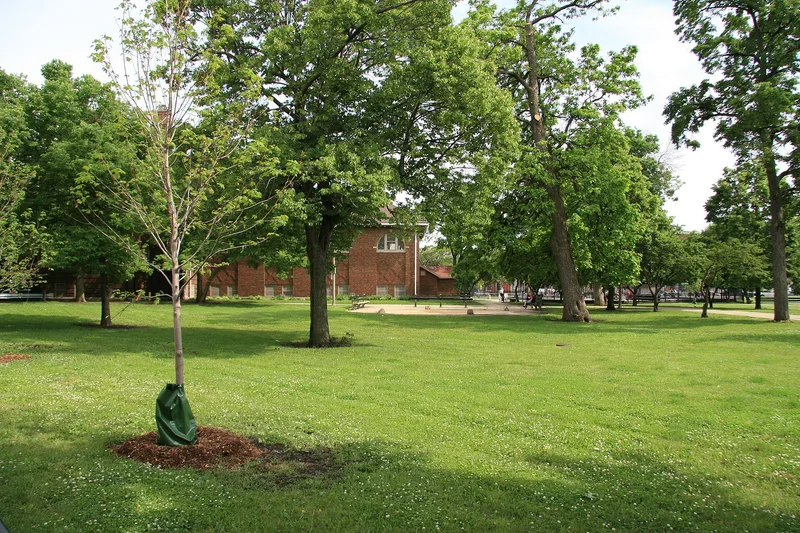
Thomas Jefferson Memorial Park is a 7.16-acre public park on Chicago's Northwest Side, first opened in 1921 by the Jefferson Park District, one of 22 small park commissions merged into the Chicago Park District in 1934. Its first field house was the Esdohr House, a brick Italianate home from the mid-1880s that was moved onto the site and is thought to be the oldest surviving house in the neighborhood. In 1930 the district enlarged the grounds and hired architect Clarence Hatzfeld, who designed a two-story Georgian Revival field house, a brick Tool House, and the landscape plan with paths, a circular planter and a semicircular drive. The field house holds a gymnasium, assembly hall and clubrooms. The park was recognized for its role in neighborhood recreation and social life, for Hatzfeld's architecture, and for the integrity of its historic layout. A World War I memorial plaque is also part of the property. Later additions include a pool, a spray pool and fencing, which are non-contributing.
Machine-generated summary. This summary was generated by a language model from the official nomination document and has not been reviewed line by line by an editor. It may contain errors. Check the source document before relying on any detail. Source: nomination document (PDF) · catalog entry. Generated October 2026 (model claude-sonnet-5-5, prompt v1.0-2026-10-29).
| Period of significance | 1921 to 1956 |
|---|---|
| Styles | Georgian Revival |
| Areas of significance | Entertainment/Recreation, Social History, Architecture |
| Acreage | 7.2 |
| Boundary source | NPS cultural-resource GIS polygon |
| Full listing page | Jefferson Park (property record) |
What listing means for this property
This is a historic district. Buildings within its boundary are either contributing (they add to the district's significance) or non-contributing. Owners of contributing income-producing buildings can claim the 20% federal rehabilitation tax credit; homeowners should look at state credits. National Register districts impose no design review by themselves; a local historic district ordinance, if one exists, does (the difference explained).
General information, not legal or tax advice. Rules change; confirm with your State Historic Preservation Office or a qualified adviser.