Indian Boundary Park

Why it's listed
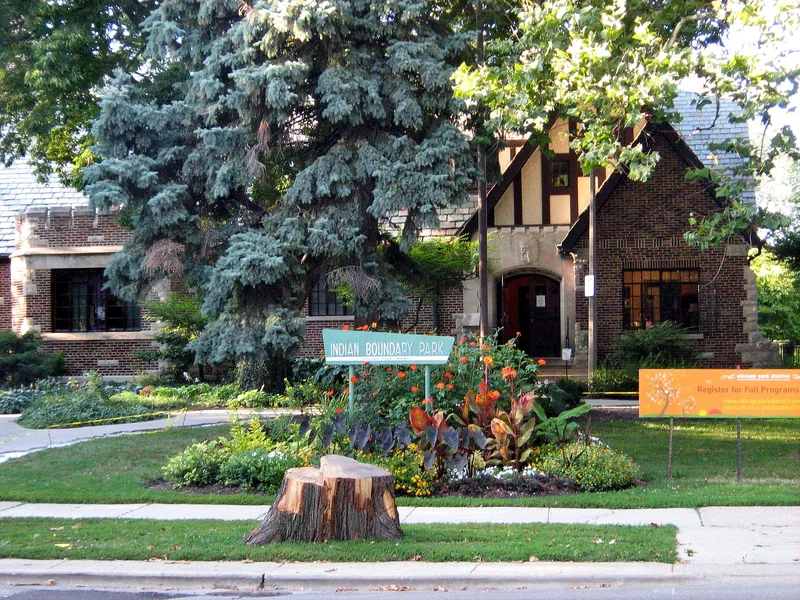
Indian Boundary Park is a 13-acre neighborhood park on Chicago's far north side, at Lunt Avenue and Rockwell Street. The Ridge Avenue Park District assembled the site in six purchases between 1915 and 1922. Evanston landscape architect Richard F. Gloede designed its picturesque layout of winding paths, rolling lawns, elliptical planting beds and a lagoon with a small wooded island. The brick, stone and half-timber Tudor Revival fieldhouse, designed by Clarence Hatzfeld, opened in 1929. A small zoo, tennis courts, children's play areas and several monuments, including a carved Indian head keystone from the former Chicago City Hall, complete the park. Work by the W.P.A. in the 1930s added plantings and a zoo barn. The park blends into the lawns of neighboring apartment complexes. Its name recalls the 1816 treaty that set Potawatomi boundaries across the site. It was listed as a district for its intact passive landscape and its role in the surrounding community.
Machine-generated summary. This summary was generated by a language model from the official nomination document and has not been reviewed line by line by an editor. It may contain errors. Check the source document before relying on any detail. Source: nomination document (PDF) · catalog entry. Generated October 2026 (model claude-sonnet-5-5, prompt v1.0-2026-10-29).
| Styles | Late 19th and 20th Century Revivals: Tudor Revival |
|---|---|
| Areas of significance | Landscape Architecture, Architecture, Entertainment/Recreation, Social History |
| Acreage | 13 |
| Boundary source | NPS cultural-resource GIS polygon |
| Full listing page | Indian Boundary Park (property record) |
What listing means for this property
This is a historic district. Buildings within its boundary are either contributing (they add to the district's significance) or non-contributing. Owners of contributing income-producing buildings can claim the 20% federal rehabilitation tax credit; homeowners should look at state credits. National Register districts impose no design review by themselves; a local historic district ordinance, if one exists, does (the difference explained).
General information, not legal or tax advice. Rules change; confirm with your State Historic Preservation Office or a qualified adviser.