Illinois Waterway Project Office
Why it's listed
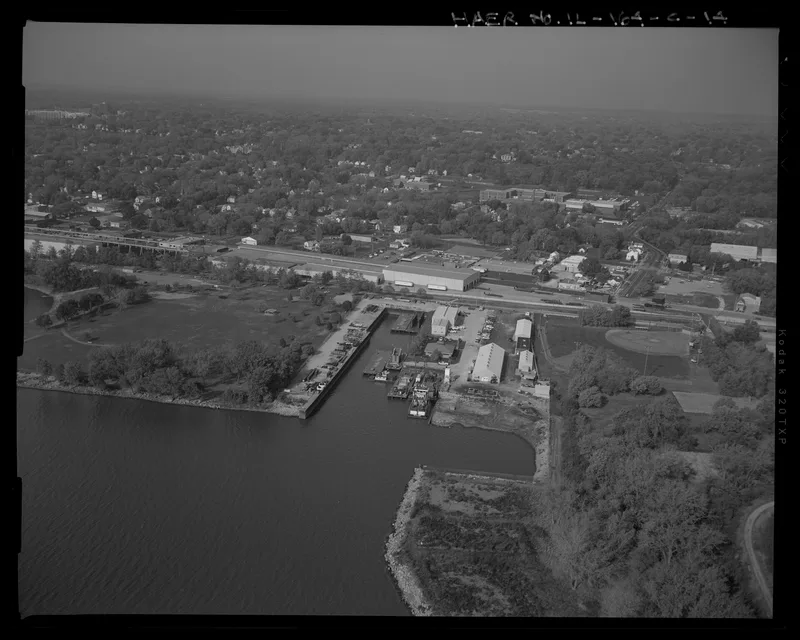
Along the Illinois River in a light industrial part of Peoria, this Army Corps of Engineers complex has serviced the boats and barges that keep the waterway working since 1913. The district includes a marine ways, where metal flat cars on tracks haul vessels out of the water for dry-dock repairs, and a rectangular boat harbor cut into the shoreline. Floating equipment includes Derrick Boat No. 3, the work barge Atlas, and the push boat Pekin. Plain metal-sheathed buildings hold storage, carpentry, painting and vehicle space, and a long brick garage dates from the 1930s. Newer additions, such as a 1992 office building, are counted as noncontributing. The complex was listed for its part in the maritime, transportation and industrial history of the Illinois Waterway, supporting the lock and dam system. Most surviving historic fabric comes from improvements made in 1928 and 1931-32.
Machine-generated summary. This summary was generated by a language model from the official nomination document and has not been reviewed line by line by an editor. It may contain errors. Check the source document before relying on any detail. Source: nomination document (PDF) · catalog entry. Generated October 2026 (model claude-sonnet-5-5, prompt v1.0-2026-10-29).
| Period of significance | 1913-52 |
|---|---|
| Styles | No style |
| Areas of significance | Maritime History, Transportation |
| Acreage | 10 |
| Boundary source | NPS cultural-resource GIS polygon |
| Full listing page | Illinois Waterway Project Office (property record) |
What listing means for this property
This is a historic district. Buildings within its boundary are either contributing (they add to the district's significance) or non-contributing. Owners of contributing income-producing buildings can claim the 20% federal rehabilitation tax credit; homeowners should look at state credits. National Register districts impose no design review by themselves; a local historic district ordinance, if one exists, does (the difference explained).
General information, not legal or tax advice. Rules change; confirm with your State Historic Preservation Office or a qualified adviser.