Haight Village Historic District (Additional Documentation)

Why it's listed
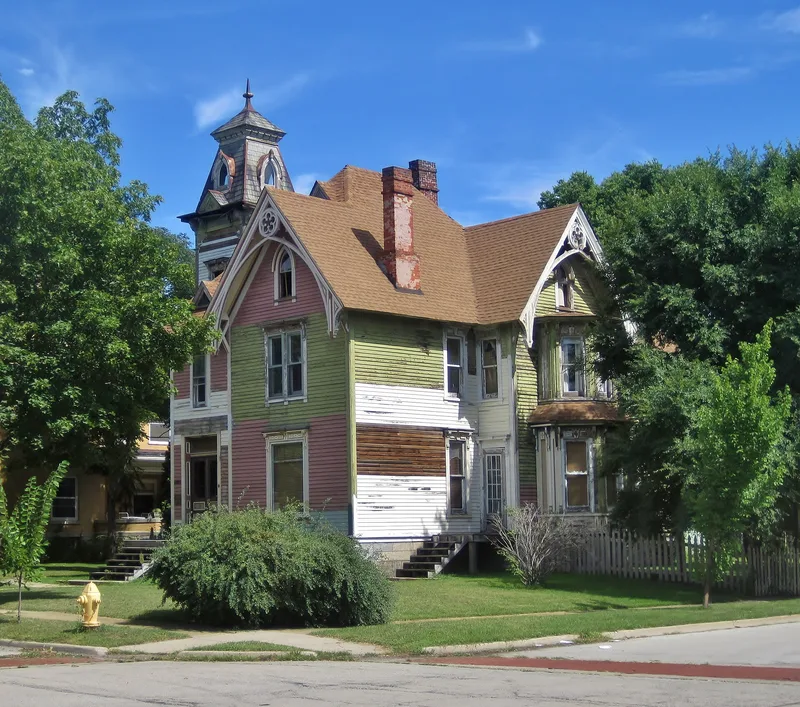
Haight Village is a 14-block neighborhood just south of Rockford's East State Street business district, in Winnebago County, Illinois. It holds about 150 buildings, mostly residential, along with churches, a Masonic Temple, a fire station, a boys club and a former watch factory. The oldest survivor is a Gothic cottage built in 1843 for Willard Wheeler, Rockford's first mayor. Most buildings date from 1860-70 and 1880-95. Their styles run from Greek Revival and Italianate through Gothic Revival and Queen Anne to Classical Revival. The area was Rockford's most fashionable address, home to leaders of industry, commerce and government such as Judge William Brown and his sons Edward and Frank, furniture makers, and bankers. Many residents worked in the nearby business district. Railroad tracks, busy arterial streets and differing land uses set the neighborhood apart from its surroundings. Restoration work since 1977 has returned many altered houses to their original look, so the district resembles its period of significance. Ninety-nine buildings contribute to its character.
Machine-generated summary. This summary was generated by a language model from the official nomination document and has not been reviewed line by line by an editor. It may contain errors. Check the source document before relying on any detail. Source: nomination document (PDF) · catalog entry. Generated October 2026 (model claude-sonnet-5-5, prompt v1.0-2026-10-29).
| Period of significance | 1843-1930 |
|---|---|
| Styles | Greek Revival, Italianate, Gothic Revival, Queen Anne, Classical Revival |
| Areas of significance | Exploration/Settlement, Architecture, Social History |
| Acreage | 42.4 |
| Boundary source | NPS cultural-resource GIS polygon |
| Full listing page | Haight Village Historic District (Additional Documentation) (property record) |
What listing means for this property
This is a historic district. Buildings within its boundary are either contributing (they add to the district's significance) or non-contributing. Owners of contributing income-producing buildings can claim the 20% federal rehabilitation tax credit; homeowners should look at state credits. National Register districts impose no design review by themselves; a local historic district ordinance, if one exists, does (the difference explained).
General information, not legal or tax advice. Rules change; confirm with your State Historic Preservation Office or a qualified adviser.