Gunderson Historic District

Why it's listed
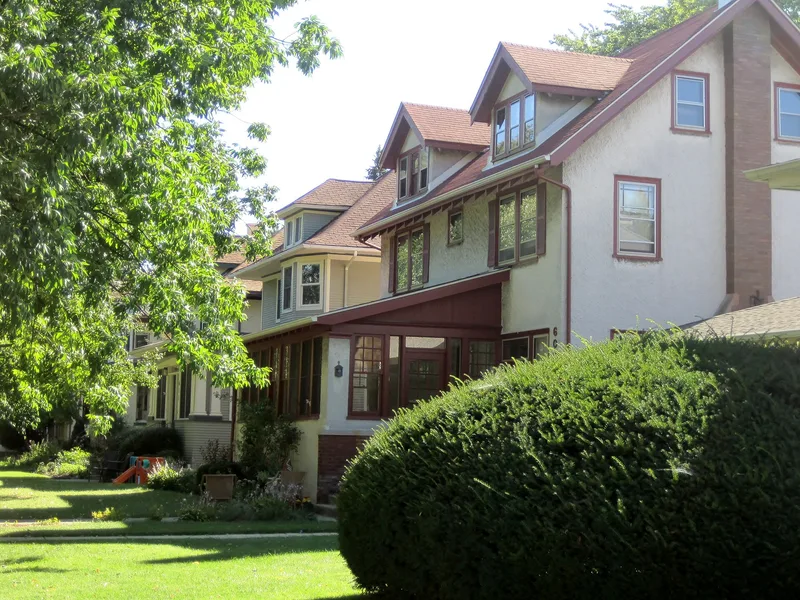
This residential district on Oak Park's south side was built between 1906 and 1920 by the developer S.T. Gunderson and Sons. It contains about 230 buildings, 228 of them contributing. Most are single-family frame houses in the American Four Square form, individualized with Colonial Revival, Arts and Crafts or Prairie School detailing. Twenty-two brick Arts and Crafts two-flats, with clay tile roofs and limestone trim, line South Ridgeland and South Cuyler Avenues. The firm sold the homes to middle-class first-time buyers through brochures and newspaper advertising, promising features such as stone basements, oak trim and art glass windows. Lots are uniformly 40 by 130 feet, with equal setbacks, alleys and tree-lined parkways. Many porches were enclosed in the 1920s and some houses have artificial siding, yet the massing, window patterns and detailing remain largely intact. The area was listed as an example of a planned, speculative suburban development and its marketing methods.
Machine-generated summary. This summary was generated by a language model from the official nomination document and has not been reviewed line by line by an editor. It may contain errors. Check the source document before relying on any detail. Source: nomination document (PDF) · catalog entry. Generated October 2026 (model claude-sonnet-5-5, prompt v1.0-2026-10-29).
| Styles | American Four-Square; Arts & Crafts; Prairie School; Colonial Revival |
|---|---|
| Areas of significance | Community Planning and Development, Architecture |
| Acreage | 42 |
| Boundary source | NPS cultural-resource GIS polygon |
| Full listing page | Gunderson Historic District (property record) |
What listing means for this property
This is a historic district. Buildings within its boundary are either contributing (they add to the district's significance) or non-contributing. Owners of contributing income-producing buildings can claim the 20% federal rehabilitation tax credit; homeowners should look at state credits. National Register districts impose no design review by themselves; a local historic district ordinance, if one exists, does (the difference explained).
General information, not legal or tax advice. Rules change; confirm with your State Historic Preservation Office or a qualified adviser.