Graceland Cemetery

Why it's listed
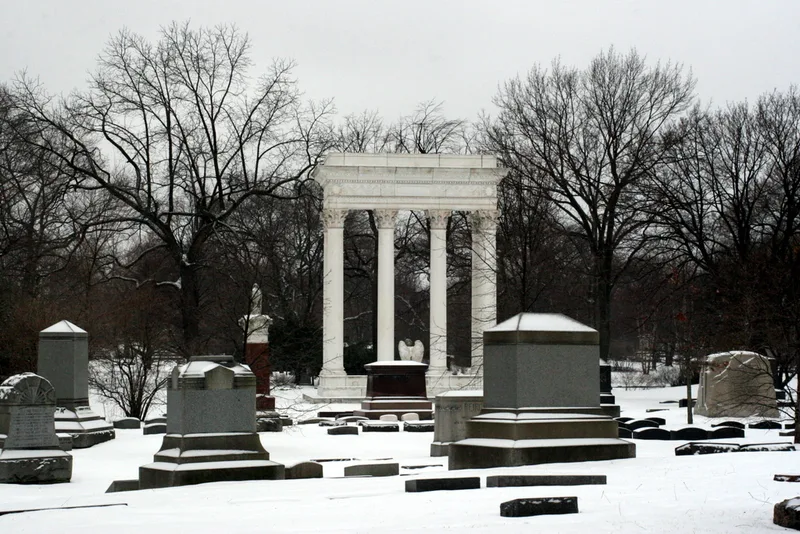
Graceland Cemetery is a 119-acre burial ground on Chicago's north side, laid out from 1860 on a sandy glacial ridge known as the Graceland spit. Founder Thomas Barbour Bryan bought the first 86 acres, and Swain Nelson designed the southwest section with advice from William Saunders. H.W.S. Cleveland planned the northwest portion around 1870, and from 1878 William Le Baron Jenney and Ossian Cole Simonds drained the low eastern ground, shaped Lake Willowmere and laid out curving roads. Simonds continued as designer and administrator until 1931. Brick and concrete walls enclose the grounds, and red granite gateposts with cast iron gates by Holabird & Roche mark the main entrance. The cemetery follows the model of early rural cemeteries such as Mount Auburn and Green-Wood. It was listed for its landscape architecture, buildings and monuments, which the nomination presents as a balanced union of planting, terrain and sculpture and as an expression of Chicago design in the late nineteenth and early twentieth centuries.
Machine-generated summary. This summary was generated by a language model from the official nomination document and has not been reviewed line by line by an editor. It may contain errors. Check the source document before relying on any detail. Source: nomination document (PDF) · catalog entry. Generated October 2026 (model claude-sonnet-5-5, prompt v1.0-2026-10-29).
| Styles | Chicago; Art Nouveau; Late 19th and 20th Century Revivals |
|---|---|
| Areas of significance | Landscape Architecture, Architecture, Art |
| Acreage | 119 |
| Boundary source | NPS cultural-resource GIS polygon |
| Full listing page | Graceland Cemetery (property record) |
What listing means for this property
This is a historic district. Buildings within its boundary are either contributing (they add to the district's significance) or non-contributing. Owners of contributing income-producing buildings can claim the 20% federal rehabilitation tax credit; homeowners should look at state credits. National Register districts impose no design review by themselves; a local historic district ordinance, if one exists, does (the difference explained).
General information, not legal or tax advice. Rules change; confirm with your State Historic Preservation Office or a qualified adviser.