Garfield Farm and Tavern

Why it's listed
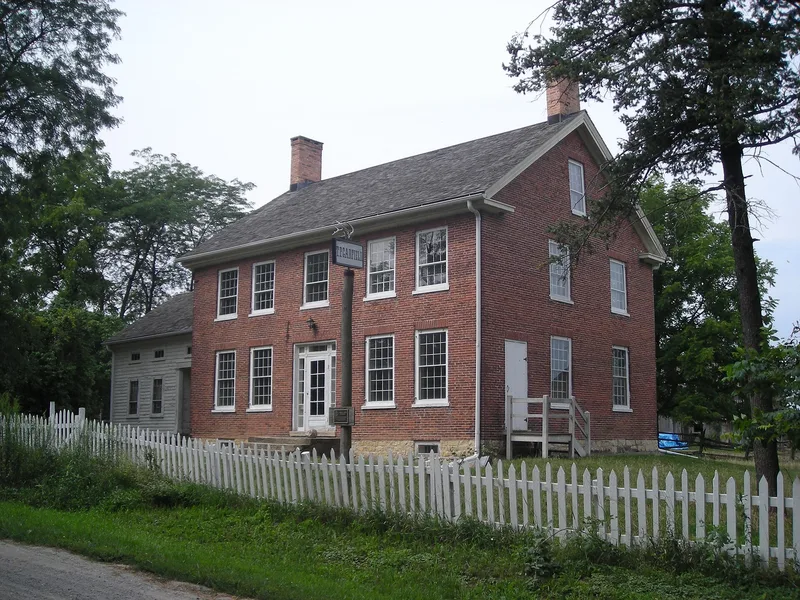
Garfield Farm and Tavern is a 237-acre farm in Campton Township, Kane County, Illinois, built around a brick tavern completed in 1846 by Timothy Powers Garfield. It sat near the fork where the road from Chicago and St. Charles divided toward Oregon and the Mississippi, and toward Sycamore and Galena. A daily stage and mail coach passed by, and travelers could get a bed and meals for 37 cents a night. Garfield's family diary records as many as 64 overnight guests and monthly dances in the second-floor ballroom. Garfield bought 440 acres in 1841 and expanded the tilled land, and the farm has produced grain, hay, livestock and dairy products ever since. The surviving buildings include barns from 1842 through 1908, a granary, carriage house, milk house, silo, windmill, cistern and well. The owner donated the property so the tavern could be restored as a museum and the farm kept working in perpetuity. The surrounding landscape remains close to its 1840s appearance.
Machine-generated summary. This summary was generated by a language model from the official nomination document and has not been reviewed line by line by an editor. It may contain errors. Check the source document before relying on any detail. Source: nomination document (PDF) · catalog entry. Generated October 2026 (model claude-sonnet-5-5, prompt v1.0-2026-10-29).
| Period of significance | 1846-1855 |
|---|---|
| Styles | Red brick classic style with Federal overtones |
| Areas of significance | Agriculture, Exploration/Settlement, Architecture |
| Acreage | 237 |
| Boundary source | NPS cultural-resource GIS polygon |
| Full listing page | Garfield Farm and Tavern (property record) |
What listing means for this property
This is a historic district. Buildings within its boundary are either contributing (they add to the district's significance) or non-contributing. Owners of contributing income-producing buildings can claim the 20% federal rehabilitation tax credit; homeowners should look at state credits. National Register districts impose no design review by themselves; a local historic district ordinance, if one exists, does (the difference explained).
General information, not legal or tax advice. Rules change; confirm with your State Historic Preservation Office or a qualified adviser.