Garden Homes Historic District

Why it's listed
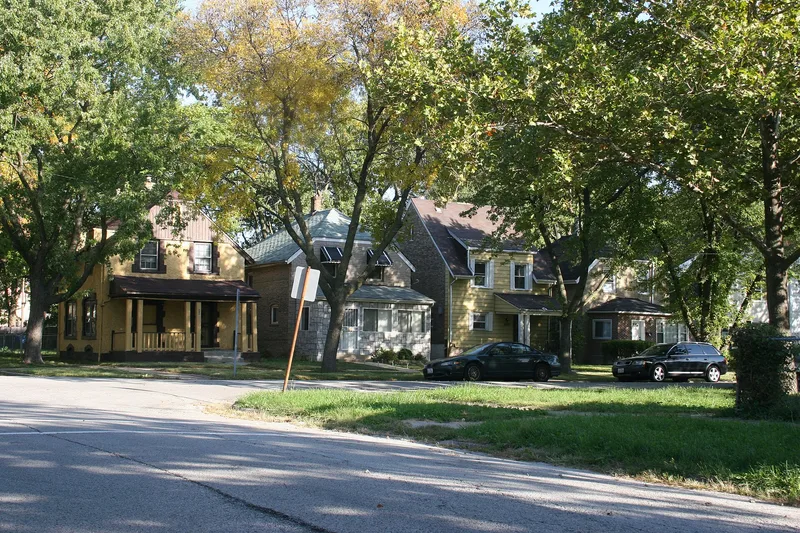
Garden Homes is a planned neighborhood of about 40 acres in Chicago's Chatham area, built in 1919-20 on land acquired by merchant Benjamin J. Rosenthal. Architect Charles S. Frost designed two-story brick cottages and stucco duplexes on a shared five-room plan, with varied hipped and gabled rooflines that recall English village cottages. Homes sit 30 feet back from the street on lots measuring 30 by 162 feet, larger than Chicago's usual 25 by 125 feet, so residents could grow vegetables. The project responded to a postwar housing shortage and is described as the city's first large-scale subsidized housing effort, supported by philanthropists who believed home ownership would make better workers and citizens. Its layout and appearance drew on England's garden city movement, including Letchworth and the London garden suburbs. Many houses have since gained siding, enclosed porches or replacement windows, yet most keep their original rooflines. Of 152 buildings, 88 are counted as contributing, and the area remains residential.
Machine-generated summary. This summary was generated by a language model from the official nomination document and has not been reviewed line by line by an editor. It may contain errors. Check the source document before relying on any detail. Source: nomination document (PDF) · catalog entry. Generated October 2026 (model claude-sonnet-5-5, prompt v1.0-2026-10-29).
| Period of significance | 1919-1920 |
|---|---|
| Styles | Late 19th and 20th Century Revivals; Other: Medieval English cottage |
| Areas of significance | Community Planning and Development |
| Acreage | 40 |
| Boundary source | NPS cultural-resource GIS polygon |
| Full listing page | Garden Homes Historic District (property record) |
What listing means for this property
This is a historic district. Buildings within its boundary are either contributing (they add to the district's significance) or non-contributing. Owners of contributing income-producing buildings can claim the 20% federal rehabilitation tax credit; homeowners should look at state credits. National Register districts impose no design review by themselves; a local historic district ordinance, if one exists, does (the difference explained).
General information, not legal or tax advice. Rules change; confirm with your State Historic Preservation Office or a qualified adviser.