Frank Lloyd Wright-Prairie School of Architecture Historic District

Why it's listed
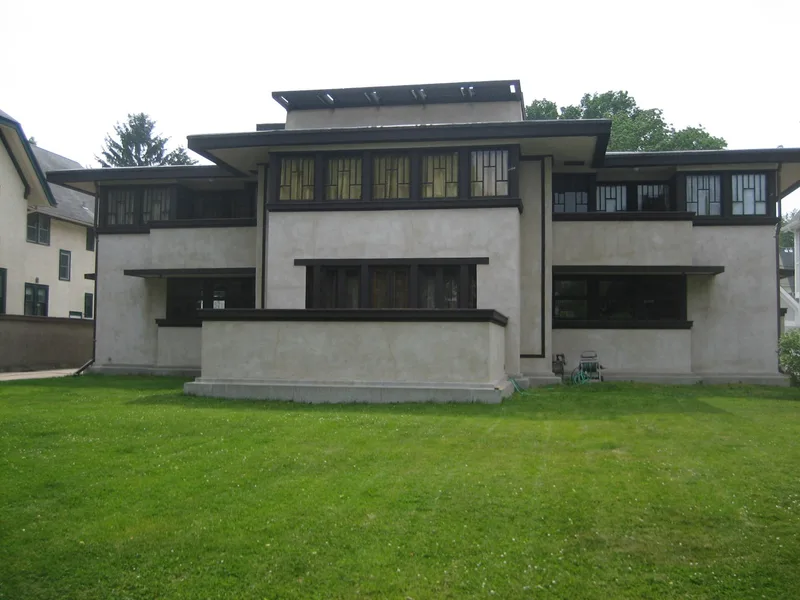
Oak Park's north-central neighborhood covers about 474 acres of former prairie laid out on a flat street grid. Detached wooden houses sit on lots of varied size behind continuous lawns and mature street trees, giving the streets a park-like character. Development began after the Civil War and was nearly complete by World War I, so styles run from Italianate through classical revival, with a notable body of early modern work. Frank Lloyd Wright settled in Oak Park in 1889, built his own house that year and a studio in 1897, and designed about twenty-five buildings in the village, most within this area. Roughly sixty-five more buildings come from Prairie School architects, including students and associates of Wright. The nomination describes this as the largest concentration of early modern architecture in the world, and says the district would likely have qualified for its suburban character and architecture from 1865 to 1917 even without Wright. Two boyhood homes of Ernest Hemingway are also here.
Machine-generated summary. This summary was generated by a language model from the official nomination document and has not been reviewed line by line by an editor. It may contain errors. Check the source document before relying on any detail. Source: nomination document (PDF) · catalog entry. Generated October 2026 (model claude-sonnet-5-5, prompt v1.0-2026-10-29).
| Period of significance | 1889-1909 |
|---|---|
| Styles | Prairie School / early modern, with Italianate through classical revival styles also present |
| Areas of significance | Architecture |
| Acreage | 457 |
| Boundary source | NPS cultural-resource GIS polygon |
| Full listing page | Frank Lloyd Wright-Prairie School of Architecture Historic District (property record) |
What listing means for this property
This is a historic district. Buildings within its boundary are either contributing (they add to the district's significance) or non-contributing. Owners of contributing income-producing buildings can claim the 20% federal rehabilitation tax credit; homeowners should look at state credits. National Register districts impose no design review by themselves; a local historic district ordinance, if one exists, does (the difference explained).
General information, not legal or tax advice. Rules change; confirm with your State Historic Preservation Office or a qualified adviser.