Evanston Ridge Historic District

Why it's listed
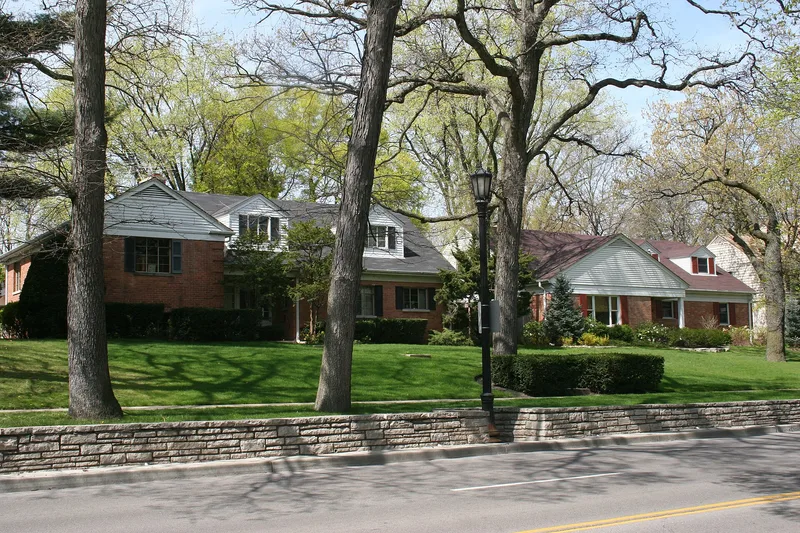
This district covers much of central Evanston west and south of the downtown business area, following a ridge left by the shoreline of glacial Lake Chicago. Early settlers chose this high, dry ground in the 1830s and 1840s. After the town was platted in 1854 and rail service made Chicago easily reachable, merchants, manufacturers, lawyers and professionals built homes here. Their houses were designed by local builders and well-known architects, including Myron Hunt, Tallmadge & Watson, Walter Burley Griffin and George W. Maher. Styles range from Italianate and Second Empire to Queen Anne and Prairie School, often side by side. Three churches from 1891 and 1892 were designed by Holabird & Roche, Burnham & Root and Stephen A. Jennings. Large lots, generous setbacks, mature trees and ornamental street lights contribute to the character. The neighborhood was later protected by a 1916 restricted-residence ordinance and the 1921 zoning ordinance, the first municipal zoning law in Illinois. The district is almost entirely residential, with three parks.
Machine-generated summary. This summary was generated by a language model from the official nomination document and has not been reviewed line by line by an editor. It may contain errors. Check the source document before relying on any detail. Source: nomination document (PDF) · catalog entry. Generated October 2026 (model claude-sonnet-5-5, prompt v1.0-2026-10-29).
| Styles | Victorian Gothic, Italianate, Second Empire, Stick Style, Queen Anne, Shingle Style, Prairie School, and revival styles, with no one style predominant |
|---|---|
| Areas of significance | Community Planning and Development, Architecture |
| Acreage | 153.4 |
| Boundary source | NPS cultural-resource GIS polygon |
| Full listing page | Evanston Ridge Historic District (property record) |
What listing means for this property
This is a historic district. Buildings within its boundary are either contributing (they add to the district's significance) or non-contributing. Owners of contributing income-producing buildings can claim the 20% federal rehabilitation tax credit; homeowners should look at state credits. National Register districts impose no design review by themselves; a local historic district ordinance, if one exists, does (the difference explained).
General information, not legal or tax advice. Rules change; confirm with your State Historic Preservation Office or a qualified adviser.