Elsah Historic District

Why it's listed
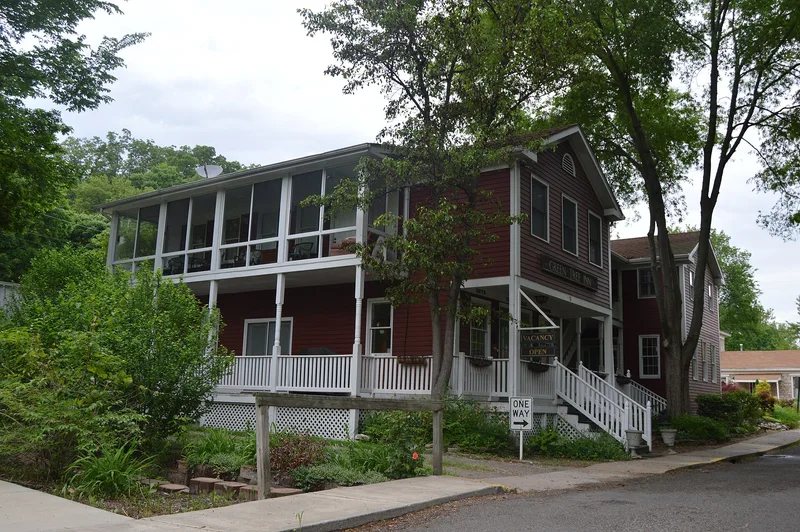
Elsah is a small Mississippi River village in Jersey County, Illinois, surveyed and named by James Semple in 1853 and essentially full-grown by about 1861. The historic district holds roughly 48 buildings with 19th-century portions, including 19 stone buildings, five early brick houses and an early frame hotel. Most follow a rural Greek Revival style, with a few mansard-roofed, Italianate and American Gothic touches. Three areas keep nearly unchanged 19th-century views: the former business district along LaSalle Street, three blocks of Mill Street, and a row of brick and stone houses between Elm and Alpa Streets. The old commercial street still has its four taverns and hotel. Remains of a railroad tunnel and cut recall Jay Gould's 1880s plans. Poverty, isolation and the long holding of surrounding land by two families, then Principia College, kept change small. A filling station by architect Bernard Maybeck is among the few notable modern additions.
Machine-generated summary. This summary was generated by a language model from the official nomination document and has not been reviewed line by line by an editor. It may contain errors. Check the source document before relying on any detail. Source: nomination document (PDF) · catalog entry. Generated October 2026 (model claude-sonnet-5-5, prompt v1.0-2026-10-29).
| Period of significance | 1847-1900 |
|---|---|
| Styles | Rural Greek Revival, with Second Empire, Italianate and American Gothic examples |
| Areas of significance | Community Planning and Development, Commerce, Transportation, Architecture |
| Acreage | 352.5 |
| Boundary source | NPS cultural-resource GIS polygon |
| Full listing page | Elsah Historic District (property record) |
What listing means for this property
This is a historic district. Buildings within its boundary are either contributing (they add to the district's significance) or non-contributing. Owners of contributing income-producing buildings can claim the 20% federal rehabilitation tax credit; homeowners should look at state credits. National Register districts impose no design review by themselves; a local historic district ordinance, if one exists, does (the difference explained).
General information, not legal or tax advice. Rules change; confirm with your State Historic Preservation Office or a qualified adviser.