Edison Park

The National Park Service has not published a boundary polygon for this district; the map shows the listed properties inside it and the district's reference point.
Why it's listed
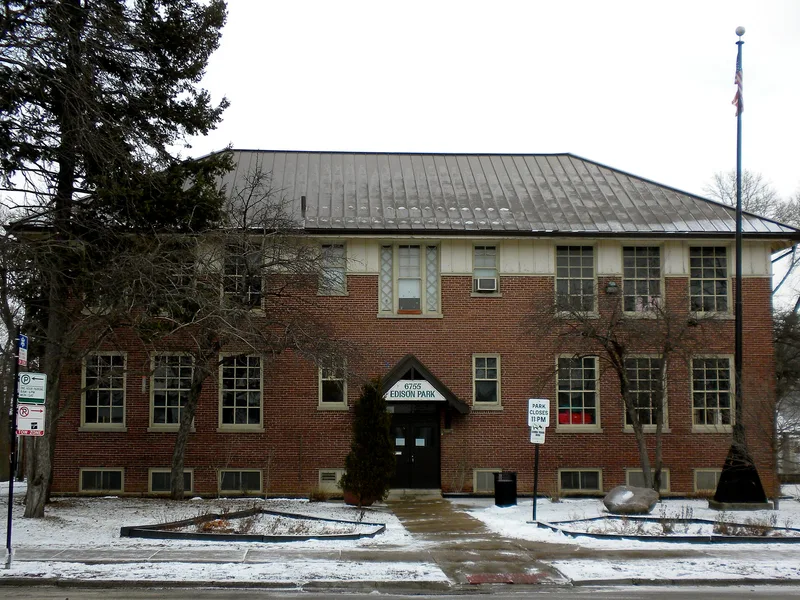
Edison Park is a small public park on Chicago's far northwest side, centered on a two-story red brick building put up in 1907 as a school for the suburb of Edison Park. Solon S. Beman, a prominent Chicago architect, designed it in a modest Arts and Crafts manner, with a hipped metal roof, exposed rafters, a decorative frieze and a gabled entrance. After the village joined Chicago in 1910, the building served as a branch school and later housed a library deposit station. In 1936 the Chicago Park District leased it and, using WPA funds, converted it to a field house, planting trees and shrubs, including hawthorns that still survive, and laying new walks. Programs included archery, rug weaving, music classes and holiday parties, and during World War II it hosted Red Cross and civil defense classes. The site is recognized for its role in community life and for Beman's architecture, and the building's interior and exterior remain largely intact.
Machine-generated summary. This summary was generated by a language model from the official nomination document and has not been reviewed line by line by an editor. It may contain errors. Check the source document before relying on any detail. Source: nomination document (PDF) · catalog entry. Generated October 2026 (model claude-sonnet-5-5, prompt v1.0-2026-10-29).
| Period of significance | 1936 to 1957 |
|---|---|
| Styles | Late 19th and Early 20th Century American Movements (Arts and Crafts style) |
| Areas of significance | Entertainment/Recreation, Social History, Architecture |
| Acreage | 0.7 |
| Boundary source | not published |
| Full listing page | Edison Park (property record) |
What listing means for this property
This is a historic district. Buildings within its boundary are either contributing (they add to the district's significance) or non-contributing. Owners of contributing income-producing buildings can claim the 20% federal rehabilitation tax credit; homeowners should look at state credits. National Register districts impose no design review by themselves; a local historic district ordinance, if one exists, does (the difference explained).
General information, not legal or tax advice. Rules change; confirm with your State Historic Preservation Office or a qualified adviser.