Durham-Perry Farmstead

The National Park Service has not published a boundary polygon for this district; the map shows the listed properties inside it and the district's reference point.
Why it's listed
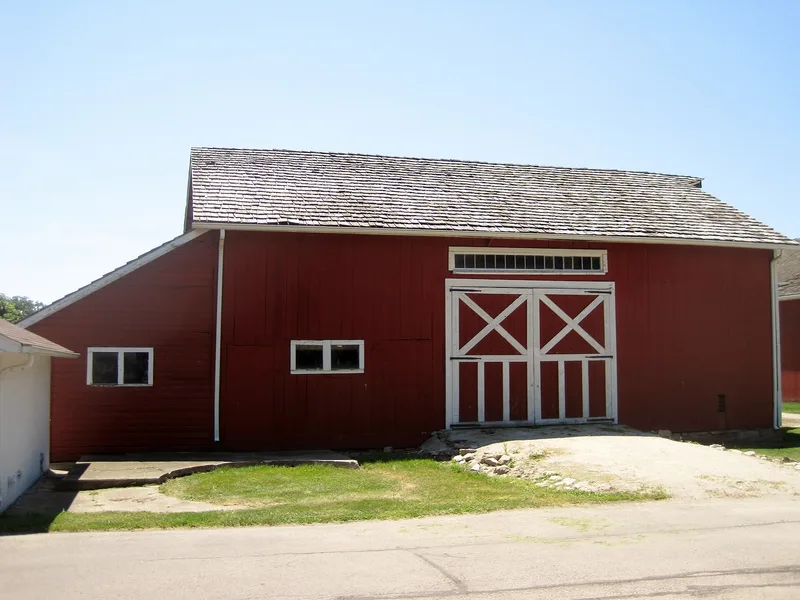
Perry Farm is a small farm complex in Bourbonnais, Illinois, now part of a 169-acre park. The nominated 2.5 acres hold a frame farmhouse begun around 1840 as a traditional two-story I-house, along with a Three-Bay English threshing barn and a horse barn dating to roughly 1838-1845. A 1940s garage, a well house and two concrete troughs also contribute, while a milk house, a storage building and a shed do not. Thomas Durham settled the farm and may have run a tavern for travelers on the nearby Hubbard Trace. After his death in 1854, his son-in-law David Perry, a carpenter and stonemason, bought the property and remodeled the house, adding a vestibule and new stairway. A fire in 1939 destroyed the roof and prompted further changes. The hand-hewn timber framing and surviving woodwork document early building practices. The house now serves as park district offices and an interpretive center.
Machine-generated summary. This summary was generated by a language model from the official nomination document and has not been reviewed line by line by an editor. It may contain errors. Check the source document before relying on any detail. Source: nomination document (PDF) · catalog entry. Generated October 2026 (model claude-sonnet-5-5, prompt v1.0-2026-10-29).
| Styles | Other: I-House; Three-Bay Barn; Horse Barn; Garage |
|---|---|
| Areas of significance | Agriculture, Architecture |
| Acreage | 2.5 |
| Boundary source | not published |
| Full listing page | Durham-Perry Farmstead (property record) |
What listing means for this property
This is a historic district. Buildings within its boundary are either contributing (they add to the district's significance) or non-contributing. Owners of contributing income-producing buildings can claim the 20% federal rehabilitation tax credit; homeowners should look at state credits. National Register districts impose no design review by themselves; a local historic district ordinance, if one exists, does (the difference explained).
General information, not legal or tax advice. Rules change; confirm with your State Historic Preservation Office or a qualified adviser.