Delavan Commercial Historic District

Why it's listed
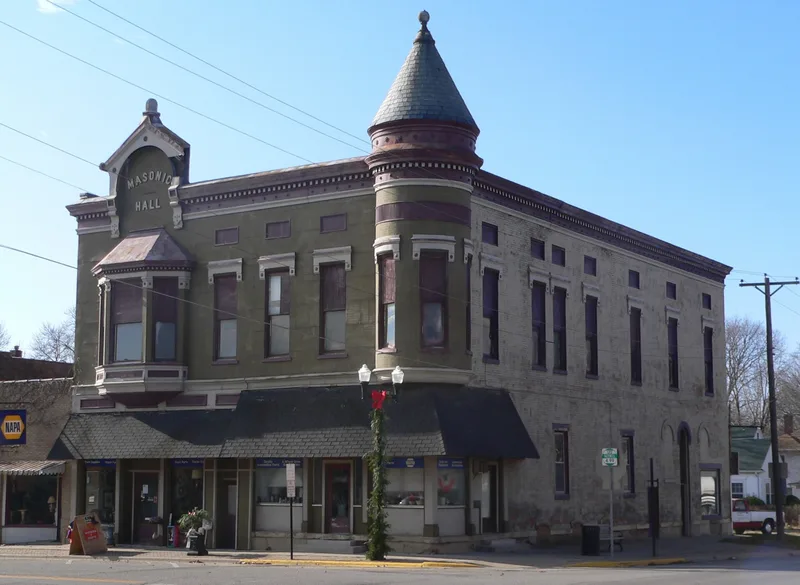
Locust Street forms the spine of Delavan's historic downtown in Tazewell County, Illinois, where 26 buildings stand in a two-block area, 20 of them contributing. Nearly all date from before 1900 or shortly after. The oldest, at 404 and 406 Locust, are Italianate brick stores from about 1860. Later buildings add more ornate Italianate cornices and window hoods, and the Masonic Hall at 401 Locust carries a Queen Anne turret. The street's most striking feature is its pressed metal upper fronts and its cast iron storefront columns and pilasters, which rarely repeat a design. A fire in 1888 destroyed five wooden buildings on the west side, and masonry replacements followed. A 1911 stone-faced concrete block lodge building marks the later end of the range. The district is significant as a record of commercial architecture in a farm and grain-shipping town that grew with railroads and surrounding agriculture.
Machine-generated summary. This summary was generated by a language model from the official nomination document and has not been reviewed line by line by an editor. It may contain errors. Check the source document before relying on any detail. Source: nomination document (PDF) · catalog entry. Generated October 2026 (model claude-sonnet-5-5, prompt v1.0-2026-10-29).
| Styles | Commercial; Italianate; Queen Anne |
|---|---|
| Areas of significance | Commerce, Architecture |
| Acreage | 3.4 |
| Boundary source | NPS cultural-resource GIS polygon |
| Full listing page | Delavan Commercial Historic District (property record) |
What listing means for this property
This is a historic district. Buildings within its boundary are either contributing (they add to the district's significance) or non-contributing. Owners of contributing income-producing buildings can claim the 20% federal rehabilitation tax credit; homeowners should look at state credits. National Register districts impose no design review by themselves; a local historic district ordinance, if one exists, does (the difference explained).
General information, not legal or tax advice. Rules change; confirm with your State Historic Preservation Office or a qualified adviser.