Deerpath Hill Estates Historic District

Why it's listed
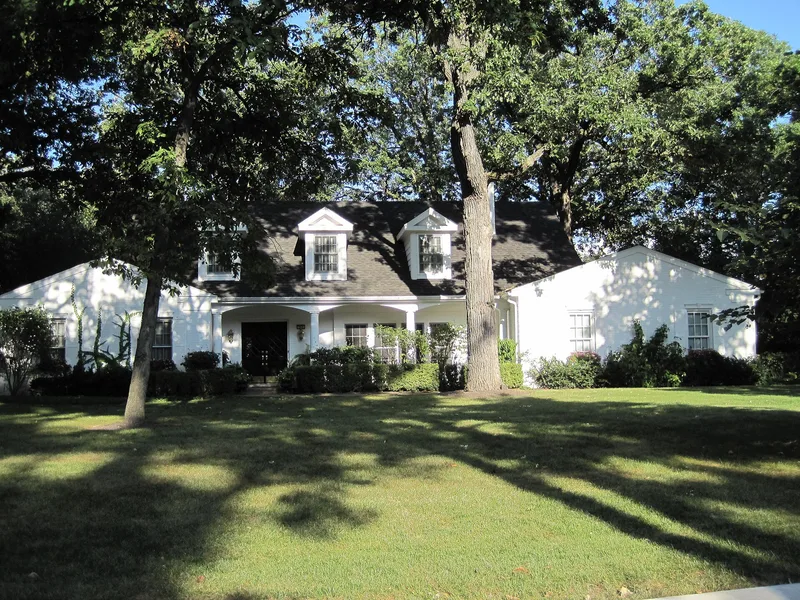
Deerpath Hill Estates is a planned residential neighborhood on the west side of Lake Forest, Illinois, laid out in the 1920s as an English Garden development. It includes an original 20-acre section and part of a First Addition on the former McKinlock estate. Curving streets, cul-de-sacs, a traffic circle, stone gateways and bronze-lantern streetlights on cast concrete poles give the area a consistent character. Architect Stanley D. Anderson designed the monuments and several early houses, and reviewed designs by other architects, which kept construction quality and appearance consistent. Pre-Depression houses show a range of revival styles, including French Norman, Cotswold, and Colonial. Ranch and split-level houses built from 1950 to 1961 followed the same setbacks and landscaping. Later houses from 1962 onward are counted as non-contributing. The district contains 35 contributing houses, 3 contributing structures and 11 contributing objects. Most houses keep their original footprints, with few additions and little use of aluminum or vinyl siding.
Machine-generated summary. This summary was generated by a language model from the official nomination document and has not been reviewed line by line by an editor. It may contain errors. Check the source document before relying on any detail. Source: nomination document (PDF) · catalog entry. Generated October 2026 (model claude-sonnet-5-5, prompt v1.0-2026-10-29).
| Styles | Tudor Revival, Colonial Revival, French Renaissance/French Norman, Other: Ranch |
|---|---|
| Areas of significance | Community Planning and Development, Architecture |
| Acreage | 40 |
| Boundary source | NPS cultural-resource GIS polygon |
| Full listing page | Deerpath Hill Estates Historic District (property record) |
What listing means for this property
This is a historic district. Buildings within its boundary are either contributing (they add to the district's significance) or non-contributing. Owners of contributing income-producing buildings can claim the 20% federal rehabilitation tax credit; homeowners should look at state credits. National Register districts impose no design review by themselves; a local historic district ordinance, if one exists, does (the difference explained).
General information, not legal or tax advice. Rules change; confirm with your State Historic Preservation Office or a qualified adviser.