Davis Square

Why it's listed
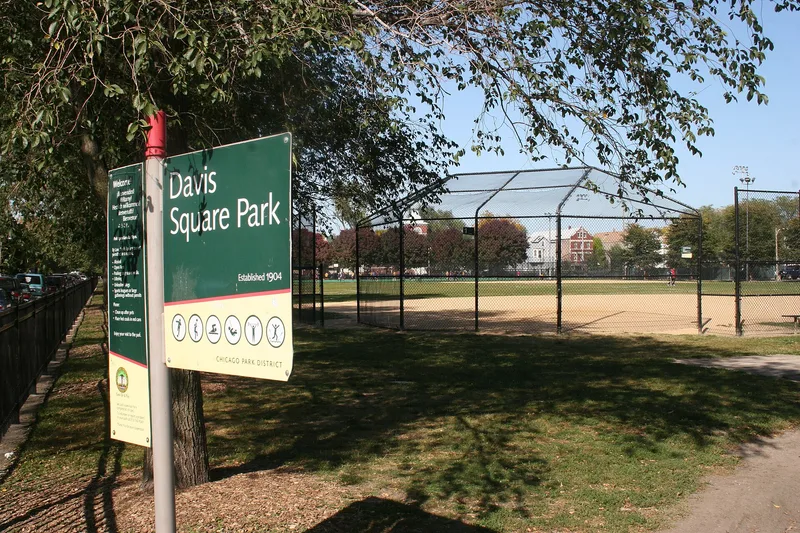
Davis Square is an 8.29-acre park on Chicago's south side, in the neighborhood known as Back-of-the-Yards. It opened on May 15, 1905, as one of fourteen planned small parks created by the South Park Commission to bring recreation, education and social services to crowded immigrant districts. The Olmsted Brothers designed the landscape and D.H. Burnham & Co. designed the buildings. The centerpiece is a Beaux Arts field house of exposed aggregate concrete, with three arched entries, keystones and molded nautilus details. Nearby are a swimming pool, a pool house, a spray pool on the site of the original wading pool, sand courts, playground areas and ball fields. Dr. Nathan Smith Davis, a prominent figure in Chicago medicine, is the park's namesake. The park was listed for its role in a pioneering park model that influenced neighborhood park design nationwide, and for its architecture and landscape. Alterations over the decades have not removed its overall historic character.
Machine-generated summary. This summary was generated by a language model from the official nomination document and has not been reviewed line by line by an editor. It may contain errors. Check the source document before relying on any detail. Source: nomination document (PDF) · catalog entry. Generated October 2026 (model claude-sonnet-5-5, prompt v1.0-2026-10-29).
| Period of significance | 1905 - 1953 |
|---|---|
| Styles | Beaux Arts Classicism |
| Areas of significance | Entertainment/Recreation, Social History, Architecture, Landscape Architecture |
| Acreage | 8.3 |
| Boundary source | NPS cultural-resource GIS polygon |
| Full listing page | Davis Square (property record) |
What listing means for this property
This is a historic district. Buildings within its boundary are either contributing (they add to the district's significance) or non-contributing. Owners of contributing income-producing buildings can claim the 20% federal rehabilitation tax credit; homeowners should look at state credits. National Register districts impose no design review by themselves; a local historic district ordinance, if one exists, does (the difference explained).
General information, not legal or tax advice. Rules change; confirm with your State Historic Preservation Office or a qualified adviser.