Columbus Park

Why it's listed
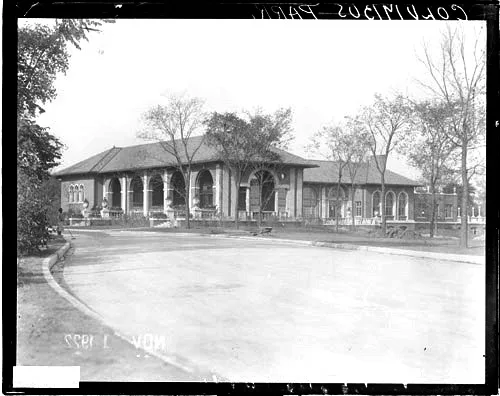
Columbus Park is a 135-acre public park on Chicago's far west side, laid out by landscape architect Jens Jensen between 1915 and 1920 for the West Park Commission. It was created to bring recreation and cultural facilities to crowded neighborhoods that were spreading westward. Jensen shaped the site around the Prairie style, with a curving lagoon fed by stone waterfalls, an outdoor theater on Players' Hill, a children's playground with a council ring, and a golf course meant to evoke the open prairie. Buildings include a 1918 fieldhouse, a 1917 stables later converted to a gymnasium, and a Mediterranean Revival refectory from 1920-22. Later changes included WPA-funded work in 1936 and the loss of about nine acres to expressway construction in 1953. The park is considered significant as a mature example of Jensen's work, together with locally important additions, and it still conveys much of his design.
Machine-generated summary. This summary was generated by a language model from the official nomination document and has not been reviewed line by line by an editor. It may contain errors. Check the source document before relying on any detail. Source: nomination document (PDF) · catalog entry. Generated October 2026 (model claude-sonnet-5-5, prompt v1.0-2026-10-29).
| Styles | Late 19th and early 20th Century American Movements / Prairie School; Late 19th and 20th Century Revivals |
|---|---|
| Areas of significance | Landscape Architecture, Entertainment/Recreation, Architecture, Social History |
| Acreage | 134.9 |
| Boundary source | NPS cultural-resource GIS polygon |
| Full listing page | Columbus Park (property record) |
What listing means for this property
This is a historic district. Buildings within its boundary are either contributing (they add to the district's significance) or non-contributing. Owners of contributing income-producing buildings can claim the 20% federal rehabilitation tax credit; homeowners should look at state credits. National Register districts impose no design review by themselves; a local historic district ordinance, if one exists, does (the difference explained).
General information, not legal or tax advice. Rules change; confirm with your State Historic Preservation Office or a qualified adviser.