Chanute Field Historic District

Why it's listed
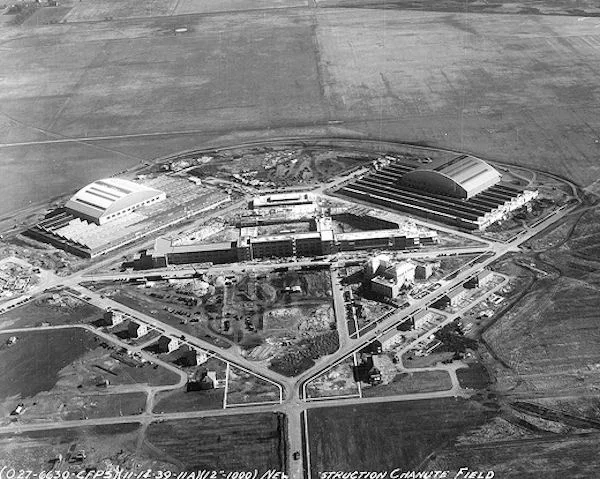
Chanute Field Historic District covers about 90 acres of the former Chanute Air Force Base in Rantoul, Illinois. It preserves a group of U.S. Army Air Corps buildings constructed mostly between 1938 and 1942, arranged on diagonal roads around a central diamond. Red brick exteriors unify the 40 contributing buildings, which include three technical school hangars, an operations hangar, a 2,200-man barracks, a 60-bed hospital, the headquarters building, and rows of officer and non-commissioned officer housing. Architectural influences range from Collegiate Gothic entrances and Art Deco detailing to Georgian Revival doorways and industrial hangar wings. The layout has changed little since 1942, and the district reflects Army base design as it stood on the eve of direct American involvement in World War II. Since the base closed in 1993, the runway area has become a private airport outside the district. Some buildings are vacant, others serve industrial uses, and one hangar holds an aerospace museum.
Machine-generated summary. This summary was generated by a language model from the official nomination document and has not been reviewed line by line by an editor. It may contain errors. Check the source document before relying on any detail. Source: nomination document (PDF) · catalog entry. Generated October 2026 (model claude-sonnet-5-5, prompt v1.0-2026-10-29).
| Styles | Late Gothic Revival/Collegiate Gothic; Modern/Art Deco; Colonial Revival |
|---|---|
| Areas of significance | Military, Architecture, Community Planning and Development |
| Acreage | 90 |
| Boundary source | NPS cultural-resource GIS polygon |
| Full listing page | Chanute Field Historic District (property record) |
What listing means for this property
This is a historic district. Buildings within its boundary are either contributing (they add to the district's significance) or non-contributing. Owners of contributing income-producing buildings can claim the 20% federal rehabilitation tax credit; homeowners should look at state credits. National Register districts impose no design review by themselves; a local historic district ordinance, if one exists, does (the difference explained).
General information, not legal or tax advice. Rules change; confirm with your State Historic Preservation Office or a qualified adviser.