Centralia Commercial Historic District

Why it's listed
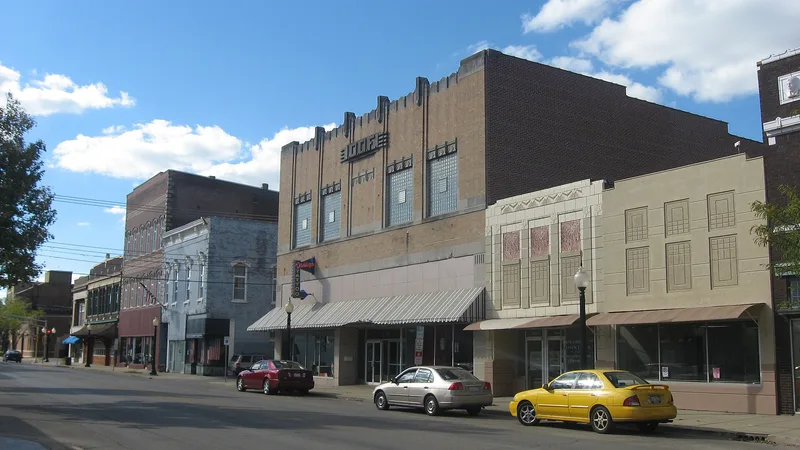
Downtown Centralia, in south-central Illinois about sixty miles east of St. Louis, grew up around the Illinois Central Railroad, which platted the town in 1853. This 19-acre district spans seven blocks along Broadway and nearby streets on both sides of the old rail yard. It holds 79 resources, of which 59 contribute, including a wooden water tower and a restored historic sign. The oldest buildings, dating from about 1850, stand on Locust and Oak Streets. West of the tracks, most buildings date from the 1890s to about 1910. East Broadway saw new construction and façade remodeling in the early twentieth century as the rail yard shrank, bringing Commercial Style buildings and Italian Renaissance and Classical Revival designs with terra cotta ornament. A few Art Deco and mid-century modern buildings also appear. Together they show how the area served as the city's commercial and social center from 1850 through 1958, with the latest contributing building dating from that year.
Machine-generated summary. This summary was generated by a language model from the official nomination document and has not been reviewed line by line by an editor. It may contain errors. Check the source document before relying on any detail. Source: nomination document (PDF) · catalog entry. Generated October 2026 (model claude-sonnet-5-5, prompt v1.0-2026-10-29).
| Period of significance | 1850-1958 |
|---|---|
| Styles | Late Victorian (Italianate, Romanesque Revival); Late 19th/Early 20th Century Commercial Style; Italian Renaissance and Classical Revivals; Modern Movement (Art Deco, Art Moderne, International Style) |
| Areas of significance | Commerce, Architecture |
| Acreage | 19 |
| Boundary source | NPS cultural-resource GIS polygon |
| Full listing page | Centralia Commercial Historic District (property record) |
What listing means for this property
This is a historic district. Buildings within its boundary are either contributing (they add to the district's significance) or non-contributing. Owners of contributing income-producing buildings can claim the 20% federal rehabilitation tax credit; homeowners should look at state credits. National Register districts impose no design review by themselves; a local historic district ordinance, if one exists, does (the difference explained).
General information, not legal or tax advice. Rules change; confirm with your State Historic Preservation Office or a qualified adviser.