Central Geneva Historic District (Boundary Increase)

Why it's listed
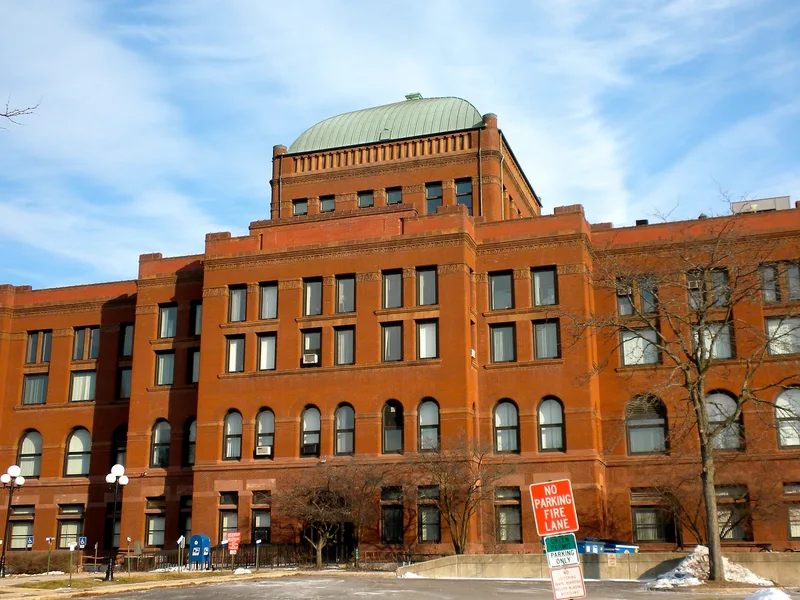
Central Geneva is a roughly 67-acre historic district on the Fox River in Geneva, Illinois, 37 miles west of Chicago. It takes in both sides of West State Street and most of the southern half of the original town plat. Most houses are two-story frame buildings from 1840 to 1900, and several are among the oldest in the city. Local riverstone vernacular houses sit alongside Greek Revival, Gothic Revival, Italianate, Federal Revival, Neoclassical and Prairie School examples. The 1892 Kane County Courthouse, built of red limestone and brick over an iron frame, anchors the area. The district reflects Geneva's growth after settlement in the 1830s, its selection as county seat in 1836, its mills and light industry along the river, and the arrival of the railroad in 1853, which drew many Swedish immigrants. Buildings such as the Unitarian Church of 1843, the 1908 Carnegie-funded library and city hall are noted for their history and design.
Machine-generated summary. This summary was generated by a language model from the official nomination document and has not been reviewed line by line by an editor. It may contain errors. Check the source document before relying on any detail. Source: nomination document (PDF). Generated October 2026 (model claude-sonnet-5-5, prompt v1.0-2026-10-29).
| Period of significance | 1800-1899 |
|---|---|
| Styles | Mixed nineteenth-century styles: Greek Revival, Gothic Revival, Italianate, Neoclassical, Federal Revival, Prairie School, and vernacular riverstone |
| Areas of significance | Architecture, Commerce, Industry, Transportation |
| Acreage | 19.44 |
| Boundary source | NPS cultural-resource GIS polygon |
| Full listing page | Central Geneva Historic District (Boundary Increase) (property record) |
What listing means for this property
This is a historic district. Buildings within its boundary are either contributing (they add to the district's significance) or non-contributing. Owners of contributing income-producing buildings can claim the 20% federal rehabilitation tax credit; homeowners should look at state credits. National Register districts impose no design review by themselves; a local historic district ordinance, if one exists, does (the difference explained).
General information, not legal or tax advice. Rules change; confirm with your State Historic Preservation Office or a qualified adviser.