Carrollton Courthouse Square Historic District

Why it's listed
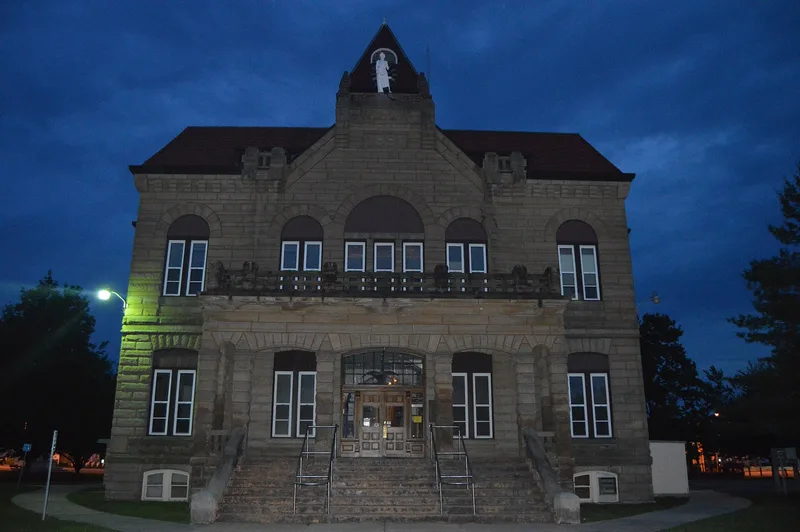
Carrollton's courthouse square is the commercial and civic center of the Greene County seat in Illinois. The district takes in twelve large quarter blocks around a full courthouse block. The courthouse, built in 1891-1892, is a rock-faced white limestone building in the Richardsonian Romanesque style, with a mansard roof and a hundred-foot bell tower. Around it stand mostly two- and three-story red brick storefronts, along with a 1902 Georgian Revival library, a 1932 post office and the early Hodges House. Building styles range from plain Federal to Italianate, Second Empire and cast iron fronts. No single style is outstanding, but together they show the variety of a small county town. Many storefronts have been modernized and some cornices altered, though upper floors are more intact. Buildings were counted as contributing if they date from 1829 to 1932 and keep enough of their original exterior. The square remains the main business area of the town.
Machine-generated summary. This summary was generated by a language model from the official nomination document and has not been reviewed line by line by an editor. It may contain errors. Check the source document before relying on any detail. Source: nomination document (PDF) · catalog entry. Generated October 2026 (model claude-sonnet-5-5, prompt v1.0-2026-10-29).
| Period of significance | 1829-1932 |
|---|---|
| Styles | Federal, Italianate, Gothic, Richardsonian Romanesque, Second Empire, Georgian Revival, and Beaux Arts Classicism influences |
| Areas of significance | Art, Politics/Government, Architecture |
| Acreage | 4 |
| Boundary source | NPS cultural-resource GIS polygon |
| Full listing page | Carrollton Courthouse Square Historic District (property record) |
What listing means for this property
This is a historic district. Buildings within its boundary are either contributing (they add to the district's significance) or non-contributing. Owners of contributing income-producing buildings can claim the 20% federal rehabilitation tax credit; homeowners should look at state credits. National Register districts impose no design review by themselves; a local historic district ordinance, if one exists, does (the difference explained).
General information, not legal or tax advice. Rules change; confirm with your State Historic Preservation Office or a qualified adviser.