Black, Margaret, Farmstead (Additional Documentation)

Why it's listed
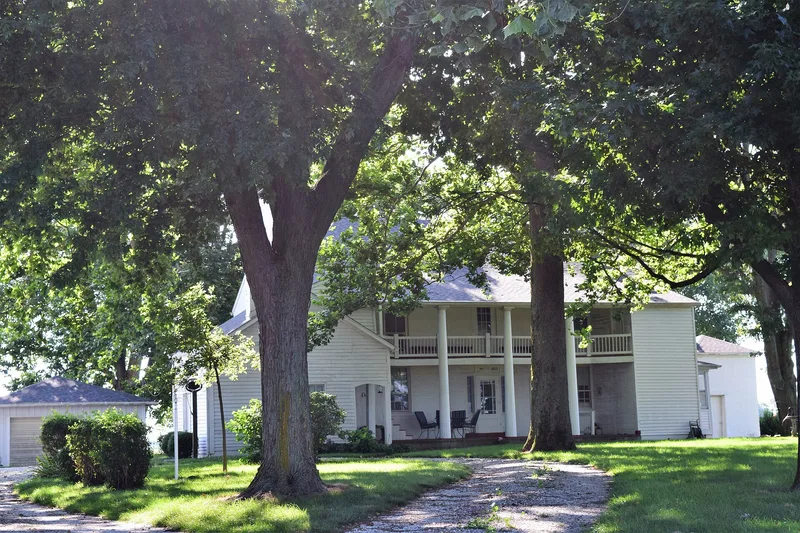
Black Homestead Farm, near Carrollton in Greene County, Illinois, is a 123-acre farmstead built around a three-brick-thick brick house completed in 1823. The land was bought from the U.S. government in 1821 by Margaret Hobson Black and her brothers, making the family among the earliest settlers of the area. The house began as a Federal-style building with a central hall plan and Flemish bond brickwork. In 1855, her son Thomas Black added a two-story porch, wash house and carriage house, giving the new west front a Greek Revival look. Other buildings include a brick smokehouse, a hand-hewn horse barn from the 1890s, and a cattle barn, garage, chicken house and machine shed from the early to mid 1900s. The property is regarded as the oldest inhabited home in Greene County and shows how a Midwestern farm developed from settlement through the mechanization of the twentieth century.
Machine-generated summary. This summary was generated by a language model from the official nomination document and has not been reviewed line by line by an editor. It may contain errors. Check the source document before relying on any detail. Source: nomination document (PDF) · catalog entry. Generated October 2026 (model claude-sonnet-5-5, prompt v1.0-2026-10-29).
| Period of significance | 1823-1955 |
|---|---|
| Styles | Federal; Greek Revival |
| Areas of significance | Architecture, Exploration/Settlement, Agriculture |
| Acreage | 123 |
| Boundary source | NPS cultural-resource GIS polygon |
| Full listing page | Black, Margaret, Farmstead (Additional Documentation) (property record) |
What listing means for this property
This is a historic district. Buildings within its boundary are either contributing (they add to the district's significance) or non-contributing. Owners of contributing income-producing buildings can claim the 20% federal rehabilitation tax credit; homeowners should look at state credits. National Register districts impose no design review by themselves; a local historic district ordinance, if one exists, does (the difference explained).
General information, not legal or tax advice. Rules change; confirm with your State Historic Preservation Office or a qualified adviser.