Austin Town Hall Park Historic District

Why it's listed
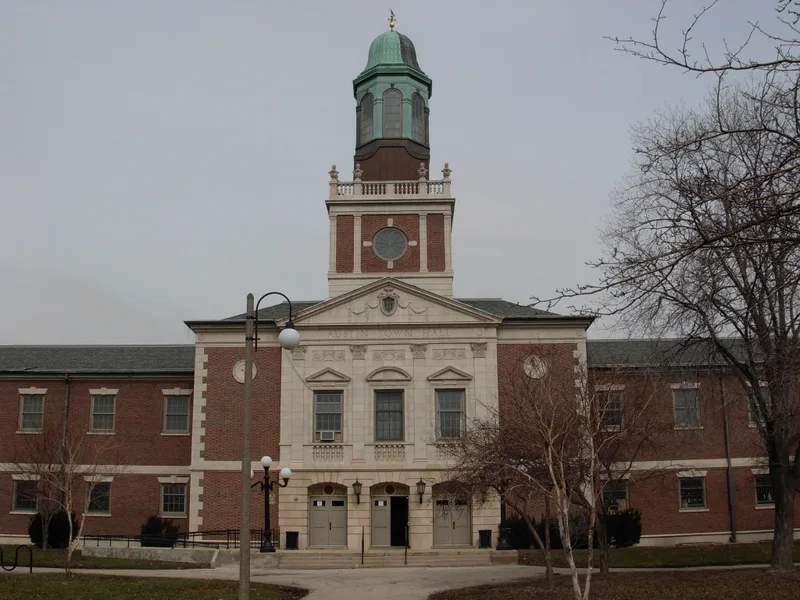
Five civic buildings gather around a four-acre park in Chicago's Austin neighborhood, about seven miles west of downtown. Built between 1900 and 1930, they include Francis Scott Key School by Dwight Perkins, the Austin Methodist Church by Sidney Badgley, the Austin YMCA by Berlin & Swern, the Austin Town Hall by Michaelsen & Rognstad, and the Henry W. Austin library branch by Alfred Alschuler. Each uses a different revival style, from collegiate Gothic to Colonial and Classical, yet all combine brick with white limestone trim, giving the group a unified look. The district was listed as an example of a neighborhood civic center, an urban form promoted by early twentieth-century reformers and planners who hoped shared public institutions would bind residents, including newcomers, into a common civic culture. The park, first dedicated to public use in 1865 as Holden Park, anchors the group. The cupola of the Town Hall and the 100-foot church spire dominate the skyline, and the buildings retain a high degree of their original character.
Machine-generated summary. This summary was generated by a language model from the official nomination document and has not been reviewed line by line by an editor. It may contain errors. Check the source document before relying on any detail. Source: nomination document (PDF) · catalog entry. Generated October 2026 (model claude-sonnet-5-5, prompt v1.0-2026-10-29).
| Period of significance | 1900-1956 |
|---|---|
| Styles | Late 19th and 20th Century Revivals: Colonial Revival, Late Gothic Revival, Classical Revival |
| Areas of significance | Social History, Community Planning and Development, Architecture |
| Acreage | 7.6 |
| Boundary source | NPS cultural-resource GIS polygon |
| Full listing page | Austin Town Hall Park Historic District (property record) |
What listing means for this property
This is a historic district. Buildings within its boundary are either contributing (they add to the district's significance) or non-contributing. Owners of contributing income-producing buildings can claim the 20% federal rehabilitation tax credit; homeowners should look at state credits. National Register districts impose no design review by themselves; a local historic district ordinance, if one exists, does (the difference explained).
General information, not legal or tax advice. Rules change; confirm with your State Historic Preservation Office or a qualified adviser.