Austin Historic District

Why it's listed
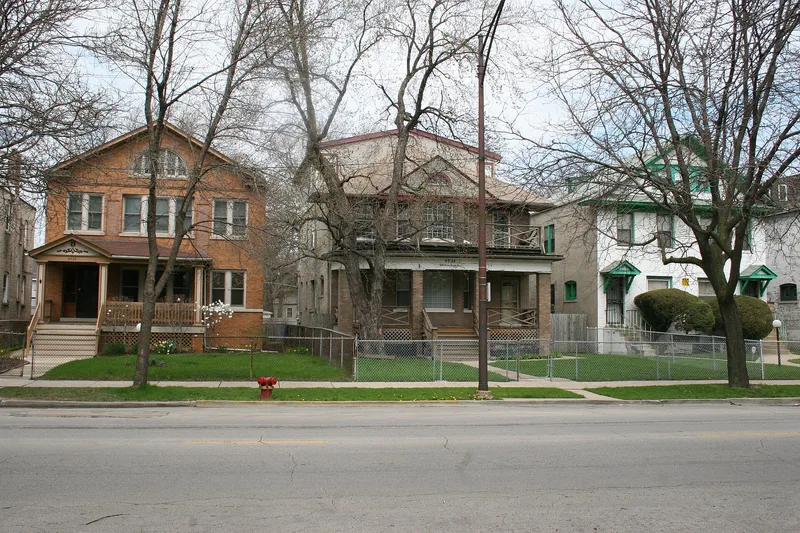
Central Austin, on Chicago's west side, holds a 95-acre district of Victorian wood houses that recall its days as a railroad suburb. Although the community became part of Chicago in 1899, its tree-lined streets, parkways and greenspace still set it apart from the denser neighborhoods around it. The earliest surviving buildings are Italianate houses from before annexation, such as the 1871 house at 5704 West Ohio Street. Queen Anne and Stick Style houses are common throughout. Much of the character comes from resident architect Frederick R. Schock, whose four large houses on Midway Park, built between 1886 and 1922, trace the shift from elaborate Victorian designs to simpler, more solid forms. Brick buildings from 1910 to 1930 fill in along Lake Street. The district also includes the 1937 Third Unitarian Church by Paul Schweikher and the 1898 former township firehouse. Commuter rail access drew middle-class professionals who built the suburb's homes, and most buildings remain from that era.
Machine-generated summary. This summary was generated by a language model from the official nomination document and has not been reviewed line by line by an editor. It may contain errors. Check the source document before relying on any detail. Source: nomination document (PDF) · catalog entry. Generated October 2026 (model claude-sonnet-5-5, prompt v1.0-2026-10-29).
| Styles | Italianate, Queen Anne, Stick Style, Shingle Style and later foursquare-type houses |
|---|---|
| Areas of significance | Community Planning and Development, Architecture |
| Acreage | 95 |
| Boundary source | NPS cultural-resource GIS polygon |
| Full listing page | Austin Historic District (property record) |
What listing means for this property
This is a historic district. Buildings within its boundary are either contributing (they add to the district's significance) or non-contributing. Owners of contributing income-producing buildings can claim the 20% federal rehabilitation tax credit; homeowners should look at state credits. National Register districts impose no design review by themselves; a local historic district ordinance, if one exists, does (the difference explained).
General information, not legal or tax advice. Rules change; confirm with your State Historic Preservation Office or a qualified adviser.