Auburn Gresham Bungalow Historic District

Why it's listed
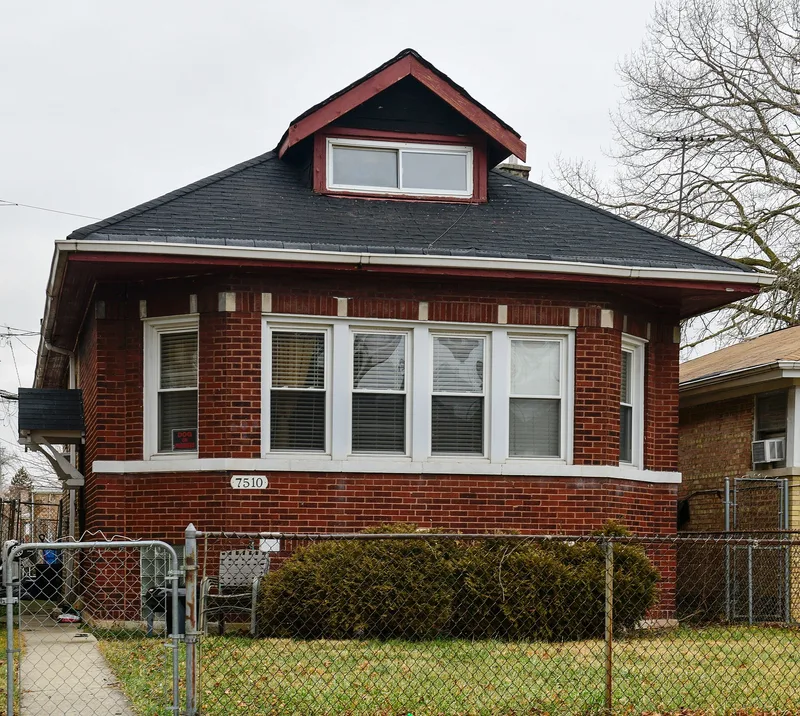
Brick bungalows dominate this residential district in Chicago's Auburn Gresham Community Area, roughly nine miles from the city center. Bounded by Paulina Street, 78th Street, Winchester Avenue and 75th Street, it holds 324 primary structures, including 264 Chicago bungalows, several brick two-flats and apartment buildings, and one elementary school. Most were built between 1918 and 1932, with construction peaking in 1926-1927 before the Great Depression ended the building boom. Dozens of architects worked here, among them William E. Sammons, who designed more than 50 buildings, and A. J. Lind. Low-pitched roofs, overhanging eaves, grouped windows, decorative brickwork and limestone trim give the streets a uniform scale. Of the primary buildings, 261 contribute to the district's character, along with 18 original brick garages. Later houses and heavily altered buildings do not contribute. The district was recognized as a well-preserved example of the bungalow neighborhoods that sheltered Chicago's growing middle class and immigrant households.
Machine-generated summary. This summary was generated by a language model from the official nomination document and has not been reviewed line by line by an editor. It may contain errors. Check the source document before relying on any detail. Source: nomination document (PDF) · catalog entry. Generated October 2026 (model claude-sonnet-5-5, prompt v1.0-2026-10-29).
| Period of significance | 1918-1932 |
|---|---|
| Styles | Other: Chicago Bungalow/Craftsman |
| Areas of significance | Community Planning and Development, Architecture |
| Acreage | 48 |
| Boundary source | NPS cultural-resource GIS polygon |
| Full listing page | Auburn Gresham Bungalow Historic District (property record) |
What listing means for this property
This is a historic district. Buildings within its boundary are either contributing (they add to the district's significance) or non-contributing. Owners of contributing income-producing buildings can claim the 20% federal rehabilitation tax credit; homeowners should look at state credits. National Register districts impose no design review by themselves; a local historic district ordinance, if one exists, does (the difference explained).
General information, not legal or tax advice. Rules change; confirm with your State Historic Preservation Office or a qualified adviser.