Allerton, Robert, Estate

Why it's listed
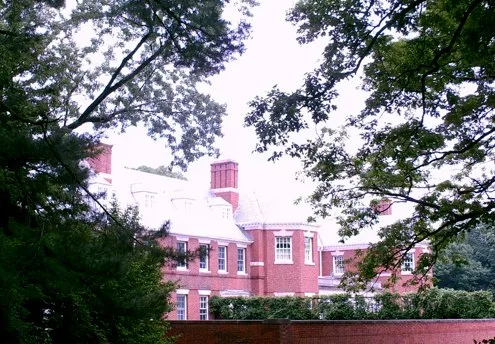
Robert Allerton's estate near Monticello, Illinois, covers about 800 acres of woodland, meadow and river valley. It was developed largely between 1899 and 1938 around a large Georgian Revival mansion, with a Gate House built in 1905 for the head gardener and a House-in-the-Woods added in 1917. Around the house lie formal gardens laid out on an axis, including a vegetable garden designed by John Borie in 1902, parterre gardens, a sunken garden and a Fu Dog Garden built in 1932. Allerton collected bronze, limestone and ceramic sculpture, and some pieces, such as Death of the Last Centaur and the Sun Singer, were given settings of their own by his collaborator John Gregg. The district is described as a fine example of the Country Place Era, when American estates joined architecture, gardens and landscape. Allerton gave the property to the University of Illinois in 1946, and it now operates as a park and conference center.
Machine-generated summary. This summary was generated by a language model from the official nomination document and has not been reviewed line by line by an editor. It may contain errors. Check the source document before relying on any detail. Source: nomination document (PDF) · catalog entry. Generated October 2026 (model claude-sonnet-5-5, prompt v1.0-2026-10-29).
| Styles | Late nineteenth and twentieth Century Revival: Georgian Revival |
|---|---|
| Areas of significance | Communications, Social History, Architecture, Landscape Architecture |
| Acreage | 800 |
| Boundary source | NPS cultural-resource GIS polygon |
| Full listing page | Allerton, Robert, Estate (property record) |
What listing means for this property
This is a historic district. Buildings within its boundary are either contributing (they add to the district's significance) or non-contributing. Owners of contributing income-producing buildings can claim the 20% federal rehabilitation tax credit; homeowners should look at state credits. National Register districts impose no design review by themselves; a local historic district ordinance, if one exists, does (the difference explained).
General information, not legal or tax advice. Rules change; confirm with your State Historic Preservation Office or a qualified adviser.