Adler, Mrs. Isaac D., House

The National Park Service has not published a boundary polygon for this district; the map shows the listed properties inside it and the district's reference point.
Why it's listed
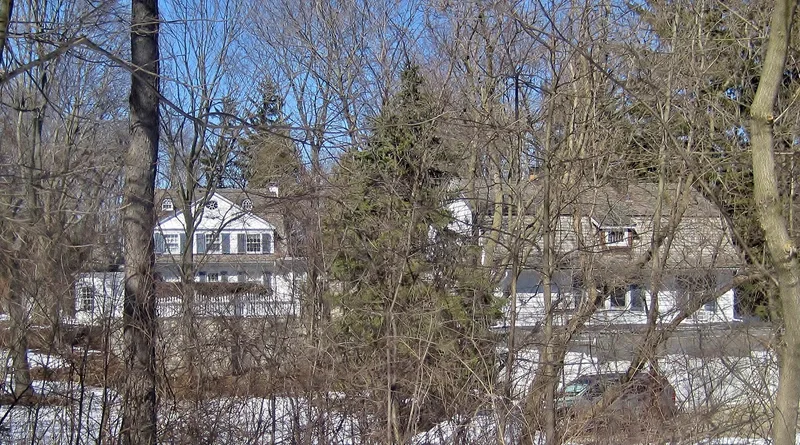
This Libertyville property on North Milwaukee Avenue is a Dutch Colonial Revival house with outbuildings and a formal landscape, set on about three acres near the Des Plaines River. Architect David Adler remodeled a small vernacular farmhouse into a symmetrical, clapboard-sided home for his mother between 1930 and 1933, adding landscape features in 1934. The center block has a gambrel roof and a broad front pediment with an oval window, flanked by glazed porches. Adler also reworked the barn/garage and designed two matching octagonal buildings, a tool shed and a pump house, at the end of an oval entrance drive. Ralph E. Griswold prepared a planting plan for the garden. The property is significant as an example of Adler's Colonial Revival work, shaped by his Beaux Arts training, and it was once connected to his own estate nearby. The house, outbuildings and surrounding landscape retain excellent integrity and remain a private residence.
Machine-generated summary. This summary was generated by a language model from the official nomination document and has not been reviewed line by line by an editor. It may contain errors. Check the source document before relying on any detail. Source: nomination document (PDF) · catalog entry. Generated October 2026 (model claude-sonnet-5-5, prompt v1.0-2026-10-29).
| Styles | Late 19th and 20th Century Revivals: Dutch Colonial Revival |
|---|---|
| Areas of significance | Architecture |
| Acreage | 3 |
| Boundary source | not published |
| Full listing page | Adler, Mrs. Isaac D., House (property record) |
What listing means for this property
This is a historic district. Buildings within its boundary are either contributing (they add to the district's significance) or non-contributing. Owners of contributing income-producing buildings can claim the 20% federal rehabilitation tax credit; homeowners should look at state credits. National Register districts impose no design review by themselves; a local historic district ordinance, if one exists, does (the difference explained).
General information, not legal or tax advice. Rules change; confirm with your State Historic Preservation Office or a qualified adviser.