West End Historic District

Why it's listed
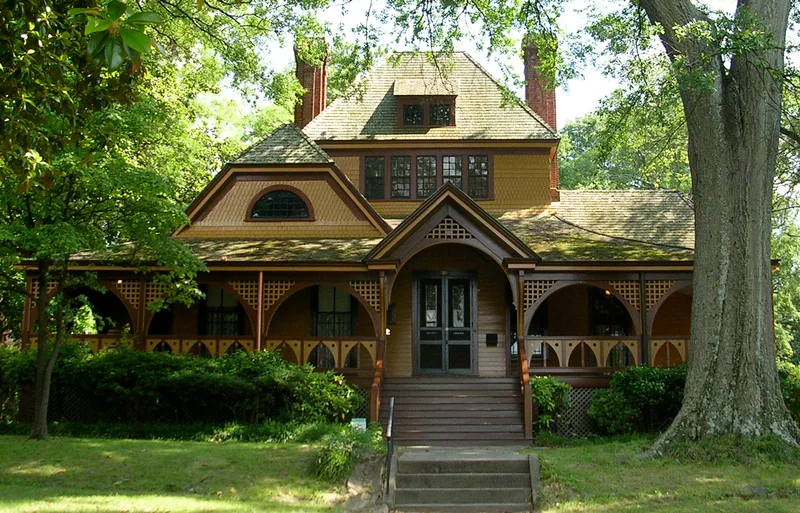
West End is a large neighborhood in southwest Atlanta, laid out along Ralph David Abernathy Boulevard, an old east-west route that follows an early Indian trail. Most of its buildings are houses from about 1870 to the 1940s, including Queen Anne, Folk Victorian, Colonial Revival and Craftsman designs, with the Craftsman bungalow the most common type. Churches, a Romanesque Revival high school from 1923, a Craftsman fire station and blocks of attached brick shops add to the mix. Two house museums, the 1867 Wren's Nest and the 1859 Hammonds House, are among the oldest buildings. The district developed around a crossroads tavern called Whitehall, and streetcar lines later guided where homes and businesses were built. Large estates were subdivided for middle-class housing, and the area became part of Atlanta in 1894. Parks, wooded back yards, tree-lined streets and West View Cemetery shape its landscape. The district was recognized for its connection to Atlanta's growth and its intact historic character.
Machine-generated summary. This summary was generated by a language model from the official nomination document and has not been reviewed line by line by an editor. It may contain errors. Check the source document before relying on any detail. Source: nomination document (PDF) · catalog entry. Generated October 2026 (model claude-sonnet-5-5, prompt v1.0-2026-10-29).
| Styles | Late Victorian (Queen Anne, Romanesque), Colonial Revival, Gothic Revival, Classical Revival, Art Deco, Bungalow/Craftsman, Folk Victorian, American Foursquare, 20th Century Commercial |
|---|---|
| Areas of significance | Community Planning and Development, Commerce, Architecture |
| Acreage | 333 |
| Boundary source | NPS cultural-resource GIS polygon |
| Full listing page | West End Historic District (property record) |
What listing means for this property
This is a historic district. Buildings within its boundary are either contributing (they add to the district's significance) or non-contributing. Owners of contributing income-producing buildings can claim the 20% federal rehabilitation tax credit; homeowners should look at state credits. National Register districts impose no design review by themselves; a local historic district ordinance, if one exists, does (the difference explained).
General information, not legal or tax advice. Rules change; confirm with your State Historic Preservation Office or a qualified adviser.