West Darien Historic District

Why it's listed
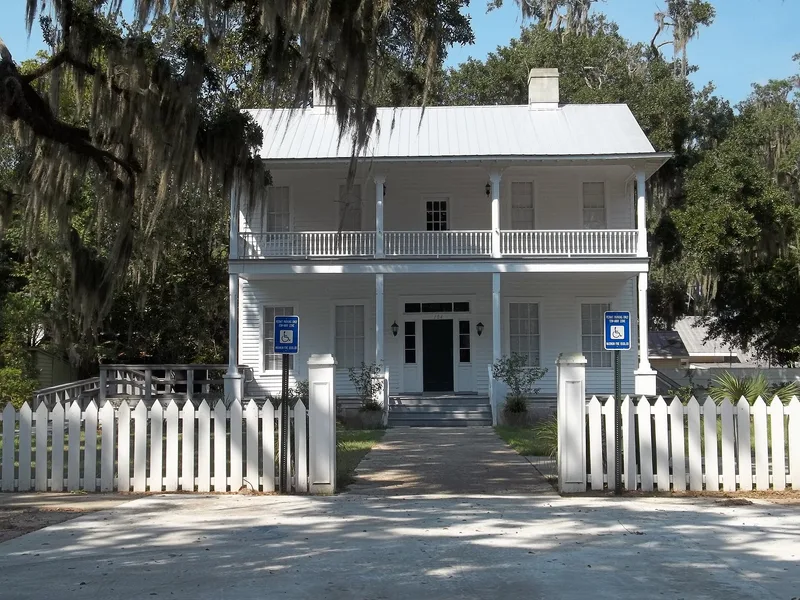
West Darien is the western section of the coastal Georgia town of Darien, laid out on a gridiron plan surveyed in 1806 by Thomas McCall. Union troops burned the town in 1863, so nearly all surviving buildings date from after the Civil War, mainly 1870 to 1910, when Darien thrived as a timber-exporting port. The district includes a commercial area along Broad Street and U.S. 17, white residential streets of mostly wooden cottages and bungalows, and Mentionville, an African-American neighborhood of shotgun, hall-parlor and central-hall houses near former sawmills. Bayard Square, home to the First Presbyterian Church, survives as the district's public square. Prehistoric shell middens and historic archaeological sites lie along Cathead Creek and the river bluff. The district was listed for its links to Darien's changing industries, its early planned town layout, its African-American heritage, its representative architecture, and the information its archaeological sites have provided.
Machine-generated summary. This summary was generated by a language model from the official nomination document and has not been reviewed line by line by an editor. It may contain errors. Check the source document before relying on any detail. Source: nomination document (PDF) · catalog entry. Generated October 2026 (model claude-sonnet-5-5, prompt v1.0-2026-10-29).
| Styles | Late 19th and Early 20th Century Revivals/Colonial Revival; Late 19th and Early 20th Century American Movements/Bungalow/Craftsman |
|---|---|
| Areas of significance | Prehistoric, Historic - Non-Aboriginal, Architecture, Community Planning and Development, Commerce, Black |
| Acreage | 94 |
| Boundary source | NPS cultural-resource GIS polygon |
| Full listing page | West Darien Historic District (property record) |
What listing means for this property
This is a historic district. Buildings within its boundary are either contributing (they add to the district's significance) or non-contributing. Owners of contributing income-producing buildings can claim the 20% federal rehabilitation tax credit; homeowners should look at state credits. National Register districts impose no design review by themselves; a local historic district ordinance, if one exists, does (the difference explained).
General information, not legal or tax advice. Rules change; confirm with your State Historic Preservation Office or a qualified adviser.