Webb Family Farm
Why it's listed
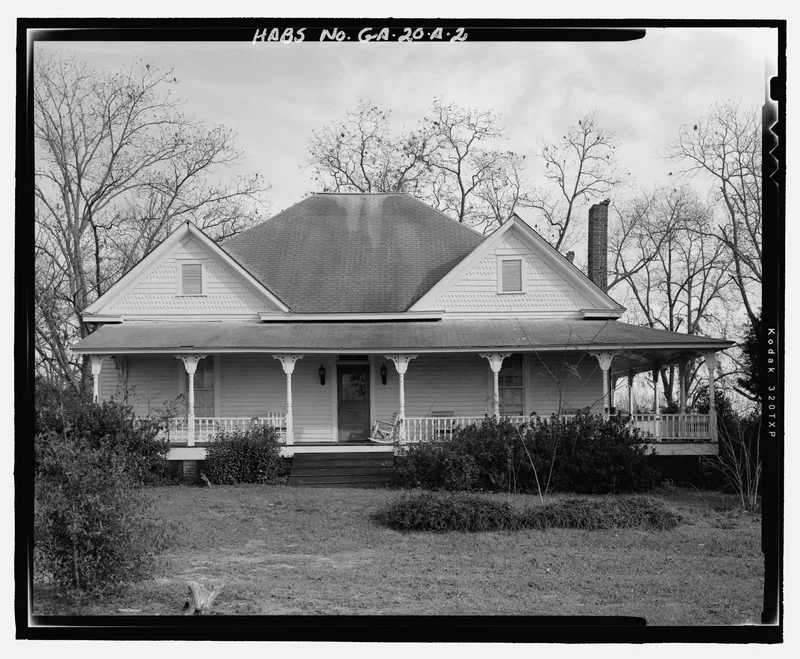
Along a mile of U.S. Highway 19 north of Smithville in Sumter County, Georgia, about 800 acres of level farmland hold three historic farmhouses and their outbuildings. The land was once part of John Ronaldson Webb's holdings, which his widow divided among seven sons in 1900. The George F. Webb House and Emory C. Webb House, both built in 1901, are one-story Victorian Eclectic homes with Queen Anne-influenced detail, including wrap-around porches, stained glass and fishscale shingles; the George Webb House also has a central turret. The William A. Webb House began as a two-room house in 1875 and was enlarged in 1903 and the 1910s. Smokehouses, barns, cribs, wash houses and windmills remain, along with three of more than twenty tenant houses. Cotton was the main crop until the boll weevil of the 1920s led to more varied farming. The Webbs also ran stores and a cotton gin in Sumter and were active in the local Baptist church.
Machine-generated summary. This summary was generated by a language model from the official nomination document and has not been reviewed line by line by an editor. It may contain errors. Check the source document before relying on any detail. Source: nomination document (PDF) · catalog entry. Generated October 2026 (model claude-sonnet-5-5, prompt v1.0-2026-10-29).
| Period of significance | 1875-1920s |
|---|---|
| Styles | Victorian Eclectic with Queen Anne-influenced detailing |
| Areas of significance | Architecture, Agriculture |
| Acreage | 800 |
| Boundary source | NPS cultural-resource GIS polygon |
| Full listing page | Webb Family Farm (property record) |
What listing means for this property
This is a historic district. Buildings within its boundary are either contributing (they add to the district's significance) or non-contributing. Owners of contributing income-producing buildings can claim the 20% federal rehabilitation tax credit; homeowners should look at state credits. National Register districts impose no design review by themselves; a local historic district ordinance, if one exists, does (the difference explained).
General information, not legal or tax advice. Rules change; confirm with your State Historic Preservation Office or a qualified adviser.