Underground Atlanta Historic District

Why it's listed
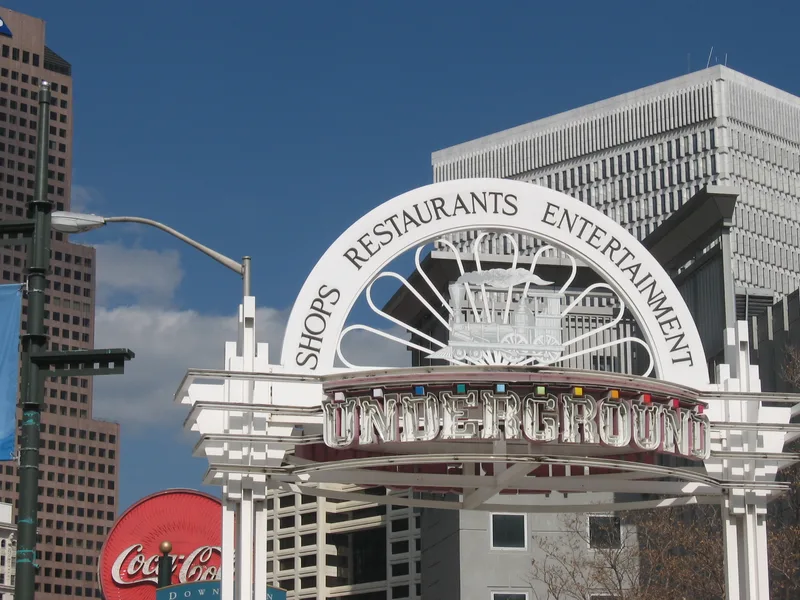
Underground Atlanta is a downtown district where the street level was raised by one story, leaving older ground-floor shops below the city. It includes about two blocks of brick commercial buildings from the late 1800s and early 1900s, mostly Victorian with some Neoclassical and Functional designs. Concrete viaducts built in 1928-29 over Central Avenue, Pryor, Alabama and Wall streets lifted traffic above the railroad gulch that had divided the city. Stores along Alabama Street became basements, with new entrances built at the higher level. The district also holds the 1869 Georgia Railroad Freight Depot, an Italianate red-brick building that is the oldest surviving structure in the central business district, and the 1850 Zero Mile Post of the Western and Atlantic Railroad. Its significance rests on how these elements show Atlanta's change from a railroad and walking town to an automobile city. Renovation beginning in 1968 and later MARTA rail construction altered parts of the area, though many iron-column facades remain.
Machine-generated summary. This summary was generated by a language model from the official nomination document and has not been reviewed line by line by an editor. It may contain errors. Check the source document before relying on any detail. Source: nomination document (PDF) · catalog entry. Generated October 2026 (model claude-sonnet-5-5, prompt v1.0-2026-10-29).
| Styles | Generally Victorian, with some Neoclassical and Functional examples; freight depot is Italianate |
|---|---|
| Areas of significance | Community Planning and Development, Commerce, Engineering, Transportation, Architecture |
| Acreage | 12 |
| Boundary source | NPS cultural-resource GIS polygon |
| Full listing page | Underground Atlanta Historic District (property record) |
What listing means for this property
This is a historic district. Buildings within its boundary are either contributing (they add to the district's significance) or non-contributing. Owners of contributing income-producing buildings can claim the 20% federal rehabilitation tax credit; homeowners should look at state credits. National Register districts impose no design review by themselves; a local historic district ordinance, if one exists, does (the difference explained).
General information, not legal or tax advice. Rules change; confirm with your State Historic Preservation Office or a qualified adviser.