Third District A & M School-Georgia Southwestern College Historic District

Why it's listed
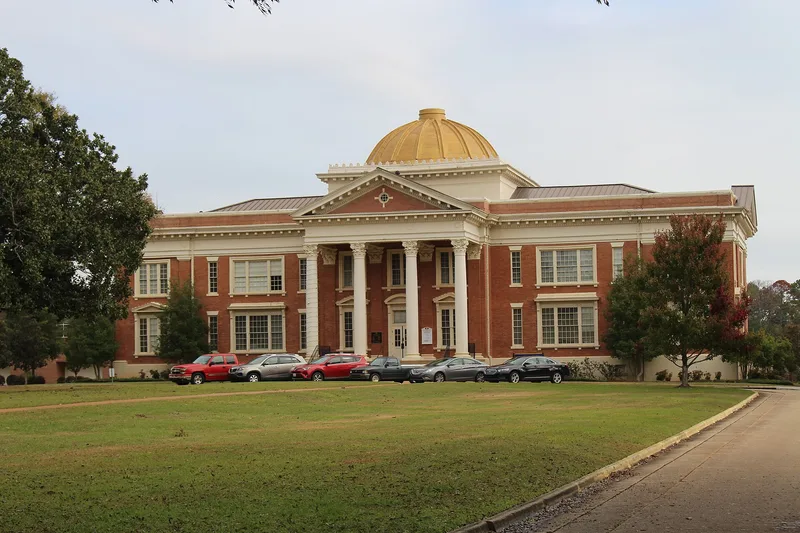
Eight brick buildings, a triangular front lawn and a small quadrangle form the historic core of Georgia Southwestern State University in Americus. The campus began in 1906 as the Third District Agricultural & Mechanical School and later became a state normal college and then Georgia Southwestern College. The first phase of construction ended in 1956. The Wheatley Administration Building, built in 1918 after a fire destroyed the original 1907 academic hall, anchors the apex of the lawn with a columned portico and dome. Smaller Colonial Revival and classical buildings angle off on either side, including dormitories, a gymnasium and an alumni center. The layout resembles other Georgia A & M schools, and the campus drew on plans by architects Haralson Bleckley, T.F. Lockwood and Crawford Wheatley, with grounds planning credited to horticulturist P.J. Berckmans. Interiors have changed over time, but the exteriors remain largely intact, preserving the early twentieth century campus design.
Machine-generated summary. This summary was generated by a language model from the official nomination document and has not been reviewed line by line by an editor. It may contain errors. Check the source document before relying on any detail. Source: nomination document (PDF) · catalog entry. Generated October 2026 (model claude-sonnet-5-5, prompt v1.0-2026-10-29).
| Styles | Late 19th and Early 20th Century Revivals: Colonial Revival, Classical Revival |
|---|---|
| Areas of significance | Architecture, Education |
| Acreage | 13 |
| Boundary source | NPS cultural-resource GIS polygon |
| Full listing page | Third District A & M School-Georgia Southwestern College Historic District (property record) |
What listing means for this property
This is a historic district. Buildings within its boundary are either contributing (they add to the district's significance) or non-contributing. Owners of contributing income-producing buildings can claim the 20% federal rehabilitation tax credit; homeowners should look at state credits. National Register districts impose no design review by themselves; a local historic district ordinance, if one exists, does (the difference explained).
General information, not legal or tax advice. Rules change; confirm with your State Historic Preservation Office or a qualified adviser.