St. Catherine's Island

Why it's listed
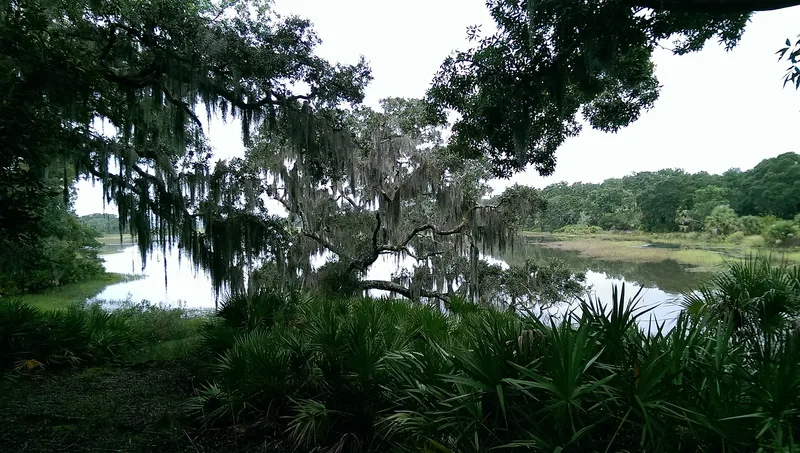
St. Catherines Island is a barrier island off the Georgia coast in Liberty County, roughly half salt marsh and half of the rest wooded. It first mattered as a Spanish outpost. Pedro Menendez de Aviles visited in 1566, soldiers were stationed there, and Jesuits founded the Santa Catalina mission in 1568. Under Spain it served as a leading mission center until attacks forced its abandonment in 1684. Potsherds and debris mark the mission area, which has seen only limited testing. In 1765 Button Gwinnett, later a signer of the Declaration of Independence, bought the island and ran it as a plantation. Part of the main house may date from the 1770s, and it was enlarged after 1929. Tabby slave quarters, old field boundaries and many Indian burial mounds survive. After 1876 the island became a country estate and game preserve, and its long preserve status kept much of its original character.
Machine-generated summary. This summary was generated by a language model from the official nomination document and has not been reviewed line by line by an editor. It may contain errors. Check the source document before relying on any detail. Source: nomination document (PDF) · catalog entry. Generated October 2026 (model claude-sonnet-5-5, prompt v1.0-2026-10-29).
| Period of significance | 1566-20th Century |
|---|---|
| Areas of significance | Historic - Aboriginal, Historic - Non-Aboriginal, Politics/Government, Religion |
| Acreage | 22265 |
| Boundary source | NPS cultural-resource GIS polygon |
| Full listing page | St. Catherine's Island (property record) |
What listing means for this property
This is a historic district. Buildings within its boundary are either contributing (they add to the district's significance) or non-contributing. Owners of contributing income-producing buildings can claim the 20% federal rehabilitation tax credit; homeowners should look at state credits. National Register districts impose no design review by themselves; a local historic district ordinance, if one exists, does (the difference explained).
General information, not legal or tax advice. Rules change; confirm with your State Historic Preservation Office or a qualified adviser.