Southside Historic District

Why it's listed
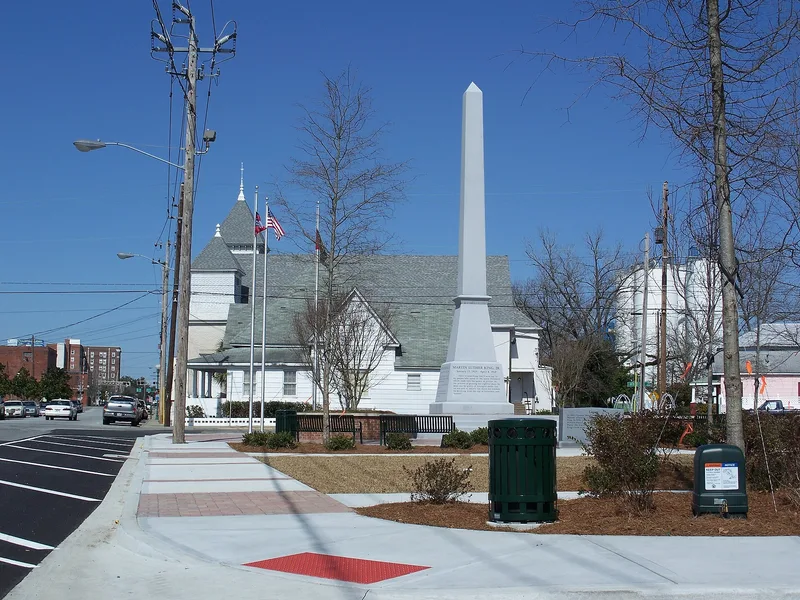
Southside is a neighborhood of Valdosta, Georgia, that grew as the city's largest African-American community from the late 19th century into the mid-20th century. Its streets first appear on an 1884 map, and most surviving houses date from the 1890s to the 1940s. They include shotgun, saddlebag, hall-parlor, Georgian cottage, bungalow and Queen Anne cottage types, mostly modest wood-frame buildings with little ornament. The district also holds churches such as St. Paul A.M.E., built in 1895, Dasher High School from 1929, the Art Deco Liberty Theatre, the 1952 Hudson-Dockett public housing, and commercial blocks along Ashley Street. In the 1930s and 1940s about 200 Black-owned businesses operated here, among them cafes, groceries, insurers and funeral homes. Grocer Thomas Hudson built a chain of stores here. The neighborhood was listed for its ethnic heritage, community planning, commerce and architecture. A 1980 overpass project split it, and only the eastern portion retained enough integrity to qualify.
Machine-generated summary. This summary was generated by a language model from the official nomination document and has not been reviewed line by line by an editor. It may contain errors. Check the source document before relying on any detail. Source: nomination document (PDF) · catalog entry. Generated October 2026 (model claude-sonnet-5-5, prompt v1.0-2026-10-29).
| Period of significance | c.1874-1955 |
|---|---|
| Styles | Folk Victorian, Craftsman, Art Deco, and vernacular house types (shotgun, saddlebag, hall-parlor, Georgian cottage, bungalow, and others) |
| Areas of significance | Architecture, Commerce, Community Planning and Development, Black |
| Acreage | 202 |
| Boundary source | NPS cultural-resource GIS polygon |
| Full listing page | Southside Historic District (property record) |
What listing means for this property
This is a historic district. Buildings within its boundary are either contributing (they add to the district's significance) or non-contributing. Owners of contributing income-producing buildings can claim the 20% federal rehabilitation tax credit; homeowners should look at state credits. National Register districts impose no design review by themselves; a local historic district ordinance, if one exists, does (the difference explained).
General information, not legal or tax advice. Rules change; confirm with your State Historic Preservation Office or a qualified adviser.