South Main Street Residential Historic District
The National Park Service has not published a boundary polygon for this district; the map shows the listed properties inside it and the district's reference point.
Why it's listed
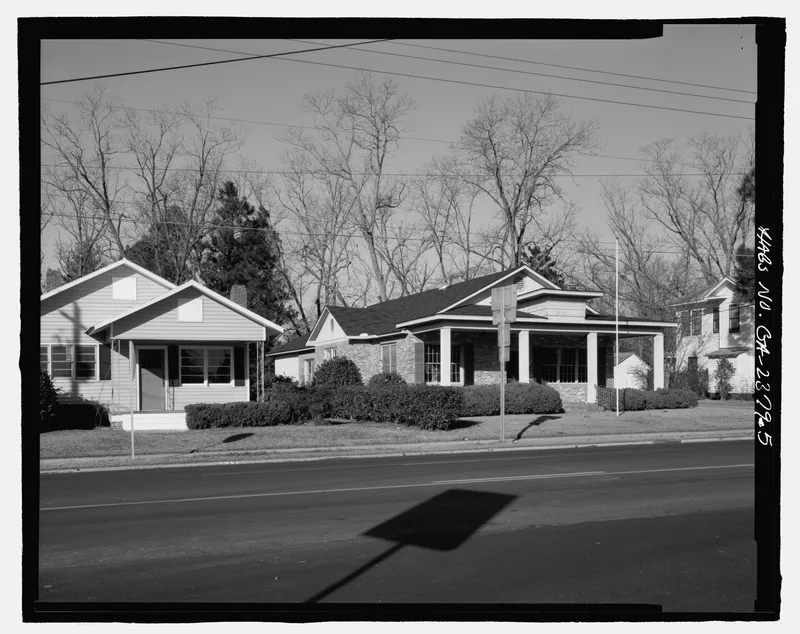
South Main Street in Statesboro, just south of the downtown business district, includes a small neighborhood of 15 houses built between about 1910 and 1930. Most are one- or one-and-a-half-story Craftsman bungalows with multi-gabled roofs, clapboard siding, exposed rafter ends and porches with tapered wooden columns on brick piers. Queen Anne cottages and a single two-story American Foursquare with a pyramidal roof are also present. The district was recognized for architecture, as a good example of modest small-town residential building in early 20th-century Georgia. Residents were largely moderate-income families, many working downtown or in commerce and agri-business. Two local educators, Sallie Zetterower and Lilly Deal, lived here. Some houses have become rental units or offices, bringing modern signs, though the historic character remains. Mature oaks, pines, azaleas and crepe myrtles shape the informal yards.
Machine-generated summary. This summary was generated by a language model from the official nomination document and has not been reviewed line by line by an editor. It may contain errors. Check the source document before relying on any detail. Source: nomination document (PDF) · catalog entry. Generated October 2026 (model claude-sonnet-5-5, prompt v1.0-2026-10-29).
| Period of significance | 1910-1930 |
|---|---|
| Styles | Bungalow/Craftsman, Queen Anne, Other: American Foursquare |
| Areas of significance | Architecture |
| Acreage | 6 |
| Boundary source | not published |
| Full listing page | South Main Street Residential Historic District (property record) |
What listing means for this property
This is a historic district. Buildings within its boundary are either contributing (they add to the district's significance) or non-contributing. Owners of contributing income-producing buildings can claim the 20% federal rehabilitation tax credit; homeowners should look at state credits. National Register districts impose no design review by themselves; a local historic district ordinance, if one exists, does (the difference explained).
General information, not legal or tax advice. Rules change; confirm with your State Historic Preservation Office or a qualified adviser.