South Carrollton Residential Historic District

Why it's listed
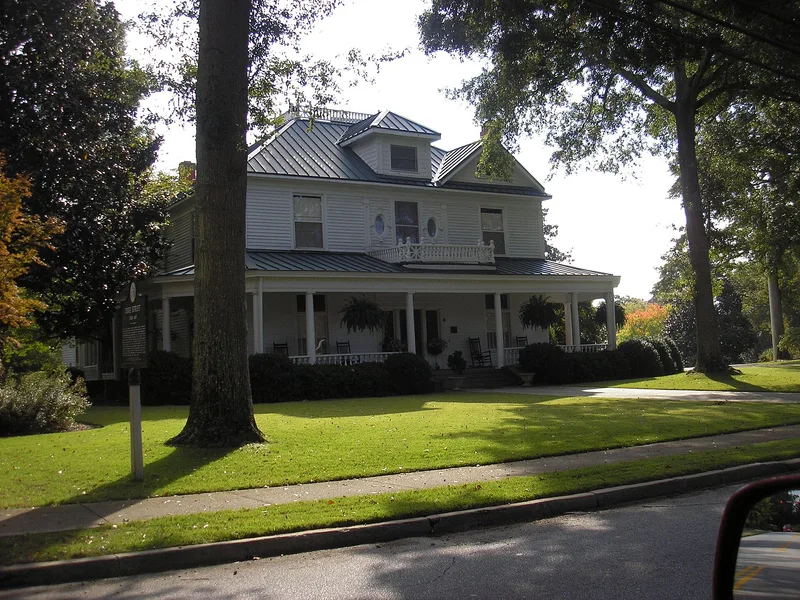
South Carrollton is a residential neighborhood of about 55 acres southeast of downtown Carrollton, Georgia, laid out on an irregular grid of tree-lined streets with sidewalks. Its one- and two-story houses, mostly wood-framed with weatherboard siding, date from the 1870s to the 1930s and range from modest cottages to large homes of prominent families. Styles include Victorian Gothic, Queen Anne, Eclectic, Neoclassical and Craftsman/Bungalow, along with an unusual early 1930s house related to the Western Stick style. The area grew after the 1874 arrival of the railroad and the improved cotton economy, and many smaller houses were built in the 1920s and 1930s for mill employees. Large lots were gradually subdivided, producing a mix of dates and styles typical of small Georgia towns. Residents ranged from merchants and professionals to laborers, including Judge W.C. Adamson, who served in Congress for twenty-five years. Informal landscaping gives the district a park-like character.
Machine-generated summary. This summary was generated by a language model from the official nomination document and has not been reviewed line by line by an editor. It may contain errors. Check the source document before relying on any detail. Source: nomination document (PDF) · catalog entry. Generated October 2026 (model claude-sonnet-5-5, prompt v1.0-2026-10-29).
| Period of significance | 1870s-1930s |
|---|---|
| Styles | Victorian Gothic, Queen Anne, Eclectic, Neoclassical and Craftsman/Bungalow, plus vernacular cottages and an early 1930s house related to the Western Stick style |
| Areas of significance | Landscape Architecture, Commerce, Architecture |
| Acreage | 55 |
| Boundary source | NPS cultural-resource GIS polygon |
| Full listing page | South Carrollton Residential Historic District (property record) |
What listing means for this property
This is a historic district. Buildings within its boundary are either contributing (they add to the district's significance) or non-contributing. Owners of contributing income-producing buildings can claim the 20% federal rehabilitation tax credit; homeowners should look at state credits. National Register districts impose no design review by themselves; a local historic district ordinance, if one exists, does (the difference explained).
General information, not legal or tax advice. Rules change; confirm with your State Historic Preservation Office or a qualified adviser.