Shirley Hills Historic District

Why it's listed
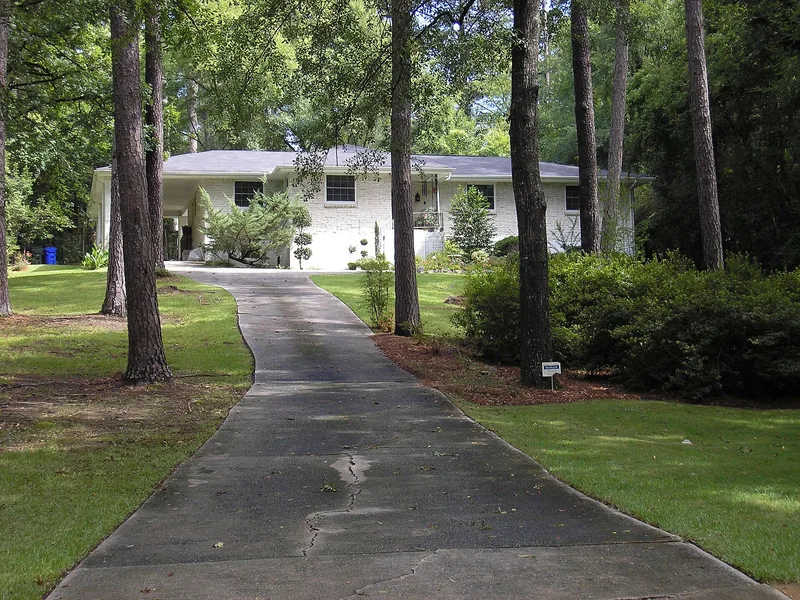
Shirley Hills is a planned residential neighborhood in northeast Macon, about a mile from downtown and bounded on the west by the Ocmulgee River. Laid out in 1922 on land from the estate of Senator Augustus O. Bacon, it was developed through the 1940s. Planner John Leon Hoffman followed the picturesque approach associated with Frederick Law Olmsted, Sr.: winding streets that follow hilly ground, large wooded lots, naturalistic landscaping, and two parks, Jackson Spring Park and Andrew Jackson Park. Restrictive covenants set house placement and minimum value, and also barred non-white residents. The houses, built from 1922 to 1941, show Georgian Revival, Neoclassical, English and French Vernacular, Italian Renaissance, Mediterranean and Spanish Colonial Revival, and Craftsman influences. Macon architects W. Elliott Dunwody, Ellamae Ellis League and Dennis and Dennis designed many of them. The district was recognized for its community planning, architecture and landscape architecture, and is described as the first and largest subdivision of its kind in Macon.
Machine-generated summary. This summary was generated by a language model from the official nomination document and has not been reviewed line by line by an editor. It may contain errors. Check the source document before relying on any detail. Source: nomination document (PDF) · catalog entry. Generated October 2026 (model claude-sonnet-5-5, prompt v1.0-2026-10-29).
| Period of significance | 1922-1941 |
|---|---|
| Styles | Colonial Revival, Classical Revival, Tudor Revival, Italian Renaissance, French Renaissance, Mission/Spanish Colonial Revival, Bungalow/Craftsman |
| Areas of significance | Community Planning and Development, Landscape Architecture, Architecture |
| Acreage | 275 |
| Boundary source | NPS cultural-resource GIS polygon |
| Full listing page | Shirley Hills Historic District (property record) |
What listing means for this property
This is a historic district. Buildings within its boundary are either contributing (they add to the district's significance) or non-contributing. Owners of contributing income-producing buildings can claim the 20% federal rehabilitation tax credit; homeowners should look at state credits. National Register districts impose no design review by themselves; a local historic district ordinance, if one exists, does (the difference explained).
General information, not legal or tax advice. Rules change; confirm with your State Historic Preservation Office or a qualified adviser.