Savannah and Ogeechee Canal

Why it's listed
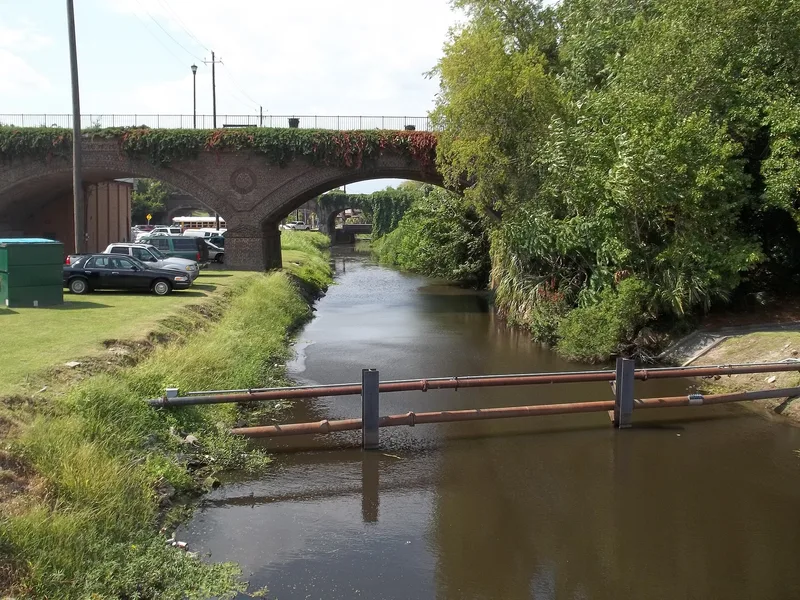
Built between 1826 and 1830, this 16.5-mile barge canal links the Savannah and Ogeechee rivers. When finished it was 48 feet wide at the top, 33 feet at the base and five feet deep, with six locks and five lock keeper's houses after 1840s improvements. Barges moved lumber, cotton and rice to Savannah's port and manufactured goods inland, and the canal supported brickyards, foundries and wharves on the city's west side, many dependent on enslaved labor. In December 1864 Union and Confederate soldiers skirmished along it during Sherman's March to the Sea; it was repaired by 1866. The Central of Georgia Railway, which bought stock in 1888, helped end its commercial role. In 1933 WPA workers drained portions and linked it to the Springfield Canal for drainage and flood control. Today sections of the earthen channel, remains of all six locks, a brick aqueduct and the Half Moon Lake dam survive, though highways, fill and development have interrupted the route.
Machine-generated summary. This summary was generated by a language model from the official nomination document and has not been reviewed line by line by an editor. It may contain errors. Check the source document before relying on any detail. Source: nomination document (PDF) · catalog entry. Generated October 2026 (model claude-sonnet-5-5, prompt v1.0-2026-10-29).
| Areas of significance | Transportation, Engineering |
|---|---|
| Acreage | 611 |
| Boundary source | NPS cultural-resource GIS polygon |
| Full listing page | Savannah and Ogeechee Canal (property record) |
What listing means for this property
This is a historic district. Buildings within its boundary are either contributing (they add to the district's significance) or non-contributing. Owners of contributing income-producing buildings can claim the 20% federal rehabilitation tax credit; homeowners should look at state credits. National Register districts impose no design review by themselves; a local historic district ordinance, if one exists, does (the difference explained).
General information, not legal or tax advice. Rules change; confirm with your State Historic Preservation Office or a qualified adviser.