Philomath Historic District

Why it's listed
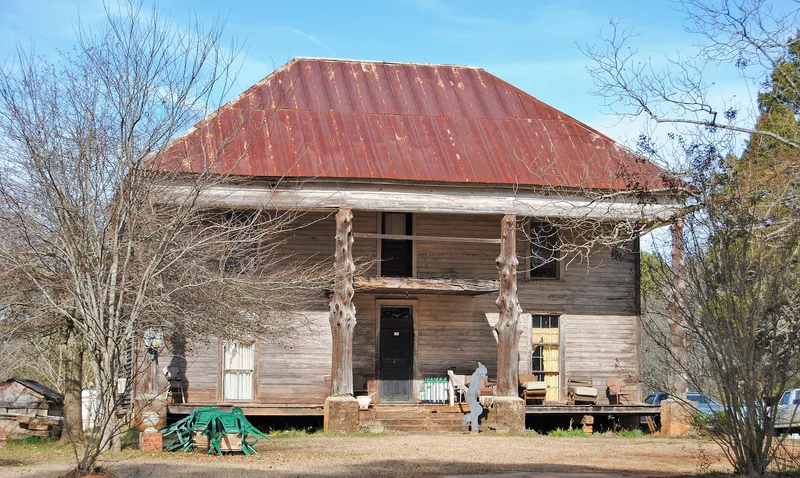
Philomath is a small Oglethorpe County, Georgia, community strung along State Route 22, and its historic district takes in about 311 acres. A one-mile stretch of mostly nineteenth-century homes, a small commercial area and a white frame Presbyterian church built around 1900 sit alongside pastures, forest, a section of the Bartram Trail and the Bartram Buffalo Lick. Three Greek Revival houses stand out, among them the Globe, considered the finest in the county, and the nearly identical Glenn-Callaway House. Older Plantation Plain houses and a log cabin dated about 1780 add to the mix. The lick, a clay area visited by naturalist William Bartram, served as an Indian meeting place and was named in the 1773 Treaty of Augusta. The town was also home to the Reid Academy, a boys' boarding school, and was where Confederate cabinet members held their last council of war in 1865. The settlement pattern appears largely original.
Machine-generated summary. This summary was generated by a language model from the official nomination document and has not been reviewed line by line by an editor. It may contain errors. Check the source document before relying on any detail. Source: nomination document (PDF) · catalog entry. Generated October 2026 (model claude-sonnet-5-5, prompt v1.0-2026-10-29).
| Period of significance | 1900- |
|---|---|
| Styles | Greek Revival and Plantation Plain |
| Areas of significance | Historic - Non-Aboriginal, Military, Education, Exploration/Settlement, Architecture |
| Acreage | 311 |
| Boundary source | NPS cultural-resource GIS polygon |
| Full listing page | Philomath Historic District (property record) |
What listing means for this property
This is a historic district. Buildings within its boundary are either contributing (they add to the district's significance) or non-contributing. Owners of contributing income-producing buildings can claim the 20% federal rehabilitation tax credit; homeowners should look at state credits. National Register districts impose no design review by themselves; a local historic district ordinance, if one exists, does (the difference explained).
General information, not legal or tax advice. Rules change; confirm with your State Historic Preservation Office or a qualified adviser.