Penn Place

Why it's listed
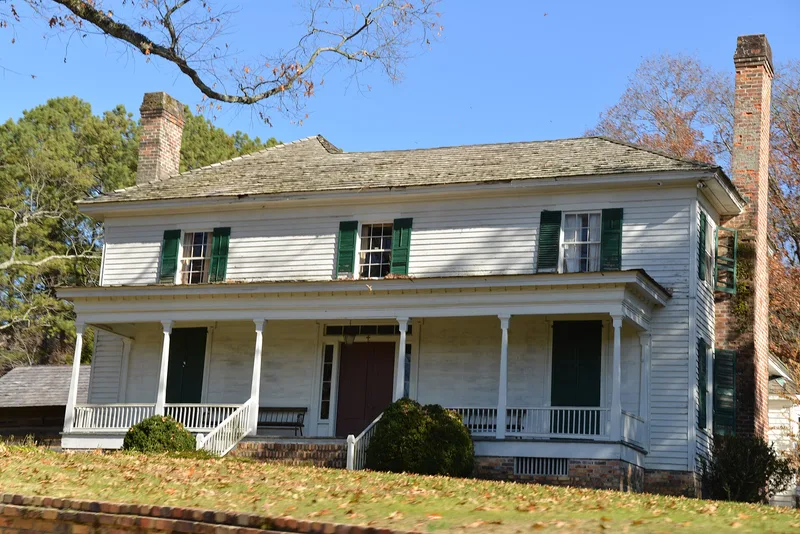
Penn Place is a farmstead of about 275 acres along the Chattooga River near Trion, Georgia. Its main house, a two-over-two Plantation Plain frame dwelling, was built in the early 1850s with hand-hewn, pegged framing and hand-made brick chimneys. The family added a kitchen ell, a farm office and a bedroom in 1875, and a sunroom and baths in 1973, yet the house looks much as it did originally. Eight outbuildings survive, including a log smokehouse, an octagonal well house, a dovecote, a servants' house, a carbide gas generator house, a mule barn and a corn crib. The property was bought by William Penn in 1849, passed to his son James in 1850, and has stayed with the family since. Cotton and corn were grown here, first with enslaved labor and later through tenant farming. The farm is also tied to a Civil War river crossing at Penn's Ford in 1864. It was listed for its architecture and its record of continuous family farming.
Machine-generated summary. This summary was generated by a language model from the official nomination document and has not been reviewed line by line by an editor. It may contain errors. Check the source document before relying on any detail. Source: nomination document (PDF) · catalog entry. Generated October 2026 (model claude-sonnet-5-5, prompt v1.0-2026-10-29).
| Period of significance | 1850-1938 |
|---|---|
| Styles | Plantation Plain |
| Areas of significance | Agriculture, Architecture |
| Acreage | 275 |
| Boundary source | NPS cultural-resource GIS polygon |
| Full listing page | Penn Place (property record) |
What listing means for this property
This is a historic district. Buildings within its boundary are either contributing (they add to the district's significance) or non-contributing. Owners of contributing income-producing buildings can claim the 20% federal rehabilitation tax credit; homeowners should look at state credits. National Register districts impose no design review by themselves; a local historic district ordinance, if one exists, does (the difference explained).
General information, not legal or tax advice. Rules change; confirm with your State Historic Preservation Office or a qualified adviser.