Penfield Historic District

Why it's listed
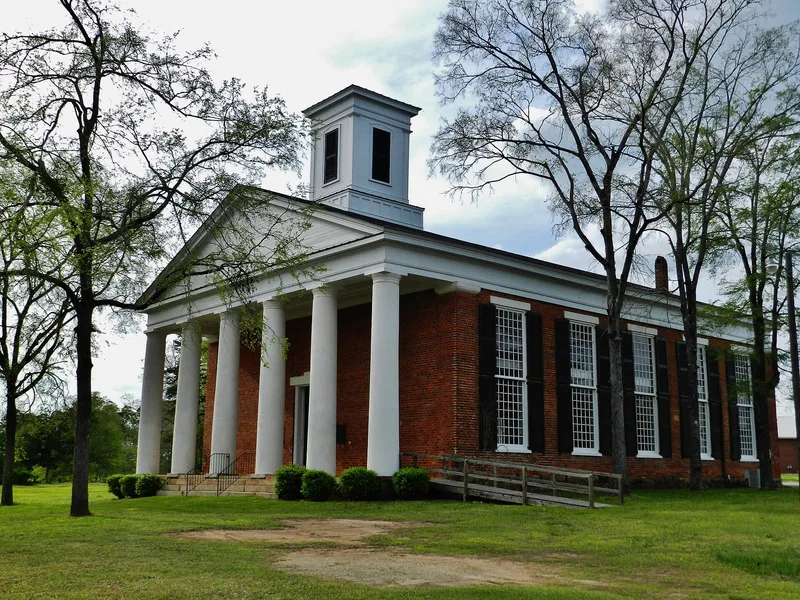
Penfield is a nineteenth-century Georgia town seven miles north of Greensboro, built around the grounds of the former Mercer University. Georgia Baptists chose the site in the 1820s, and Mercer Institute opened there in 1833 with 39 students, becoming Mercer University by act of the legislature in 1837. The campus slope still holds the 1846 Chapel, with its Doric portico and bell tower, the 1853 Science Hall, and the 1857 President's House. Several other college buildings have been lost. Mercer moved to Macon by 1871, and much campus land passed to private owners. Around the campus are a Female Academy founded in 1838, a Presbyterian church from 1876, brick commercial buildings, a cemetery containing Jesse Mercer's grave, and houses from the 1840s onward. Their styles run from plantation plain to Greek Revival and early Victorian cottages. The district was listed for its role in early Georgia education and its intact mid-nineteenth-century character.
Machine-generated summary. This summary was generated by a language model from the official nomination document and has not been reviewed line by line by an editor. It may contain errors. Check the source document before relying on any detail. Source: nomination document (PDF) · catalog entry. Generated October 2026 (model claude-sonnet-5-5, prompt v1.0-2026-10-29).
| Period of significance | 1800-1899 |
|---|---|
| Styles | Greek Revival, plantation plain and early Victorian |
| Areas of significance | Education, Politics/Government, Architecture |
| Acreage | 305 |
| Boundary source | NPS cultural-resource GIS polygon |
| Full listing page | Penfield Historic District (property record) |
What listing means for this property
This is a historic district. Buildings within its boundary are either contributing (they add to the district's significance) or non-contributing. Owners of contributing income-producing buildings can claim the 20% federal rehabilitation tax credit; homeowners should look at state credits. National Register districts impose no design review by themselves; a local historic district ordinance, if one exists, does (the difference explained).
General information, not legal or tax advice. Rules change; confirm with your State Historic Preservation Office or a qualified adviser.