Peachtree Heights Park

Why it's listed
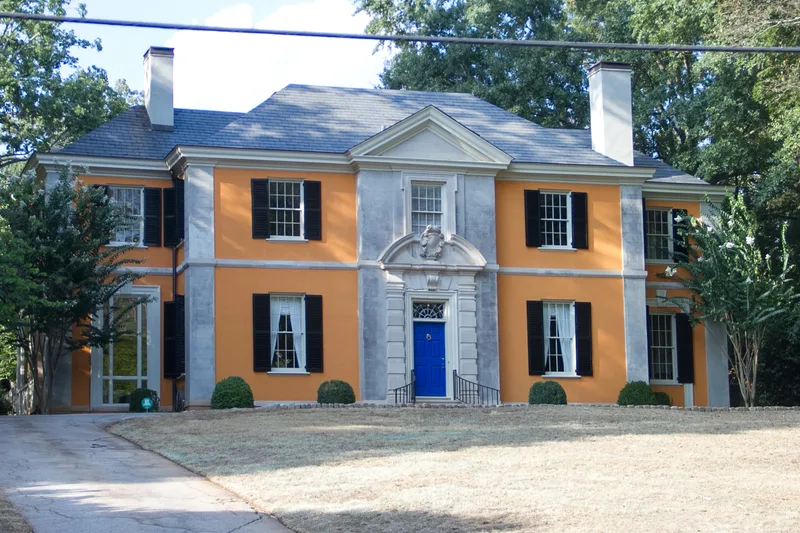
Peachtree Heights Park is a roughly 440-acre residential district in Atlanta, planned around curving streets that follow the natural land. Peachtree Battle Avenue, a wide divided road with a landscaped median, anchors the layout, and Habersham Road, Rivers Road, Nacoochee Drive and Woodward Way branch from it. Streambeds at Habersham and West Wesley roads were kept as stone-walled parks with their vegetation untouched. After Wesley Gray Collier died in 1906, his estate's executors formed the Peachtree Heights Park Company, which hired Carrere and Hastings to plan the subdivision. Lots first sold in 1911. The houses represent Tudor, Georgian, Federal, Norman, Spanish and other revival styles, blended by naturalistic landscaping with large stands of trees and broad lawns. Hentz, Reid and Adler designed at least fifteen of them, and landscape architect William C. Pauley worked on several gardens. The district was listed for its architecture and landscape design, and for being among the best-preserved planned subdivisions in the Atlanta area.
Machine-generated summary. This summary was generated by a language model from the official nomination document and has not been reviewed line by line by an editor. It may contain errors. Check the source document before relying on any detail. Source: nomination document (PDF) · catalog entry. Generated October 2026 (model claude-sonnet-5-5, prompt v1.0-2026-10-29).
| Styles | Mixed revival styles including English Tudor, Jacobean, Georgian, Federal, Norman, Italian, Spanish Mediterranean and Regency |
|---|---|
| Areas of significance | Community Planning and Development, Landscape Architecture, Architecture |
| Acreage | 440 |
| Boundary source | NPS cultural-resource GIS polygon |
| Full listing page | Peachtree Heights Park (property record) |
What listing means for this property
This is a historic district. Buildings within its boundary are either contributing (they add to the district's significance) or non-contributing. Owners of contributing income-producing buildings can claim the 20% federal rehabilitation tax credit; homeowners should look at state credits. National Register districts impose no design review by themselves; a local historic district ordinance, if one exists, does (the difference explained).
General information, not legal or tax advice. Rules change; confirm with your State Historic Preservation Office or a qualified adviser.